James David Graham Niven (; 1 March 1910 – 29 July 1983) was an English actor, soldier, raconteur, memoirist and novelist. Niven was known as a handsome and debonair leading man in classic Hollywood films. His accolades include an Academy Award and two Golden Globe Awards in addition to nominations for a BAFTA Award and two Emmy Awards.
Born in central London to an upper-middle-class family, Niven attended Heatherdown Preparatory School and Stowe School before gaining a place at the Royal Military College, Sandhurst. After Sandhurst, he was commissioned as a second lieutenant in the Highland Light Infantry. Upon developing an interest in acting, he found a role as an extra in the British film There Goes the Bride (1932). Bored with the peacetime army, he resigned his commission in 1933, relocated to New York, then travelled to Hollywood. There, he hired an agent and had several small parts in films through 1935, including a non-speaking role in Metro-Goldwyn-Mayer's Mutiny on the Bounty (1935). This helped him gain a contract with Samuel Goldwyn.
Parts, initially small, in major motion pictures followed, including Dodsworth (1936), The Charge of the Light Brigade (1936), and The Prisoner of Zenda (1937). By 1938, he was starring as a leading man in films such as Wuthering Heights (1939). Upon the outbreak of the Second World War, Niven returned to Britain and rejoined the army, being recommissioned as a lieutenant. In 1942, he co-starred in the morale-building film about the development of the renowned Supermarine Spitfire fighter plane, The First of the Few (1942).
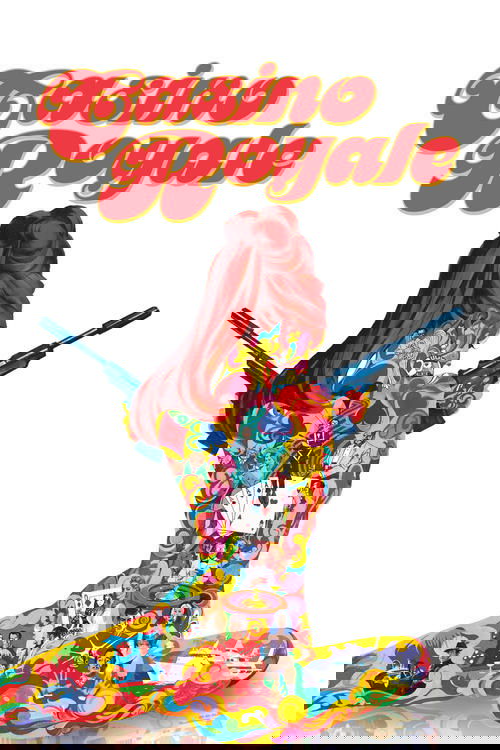
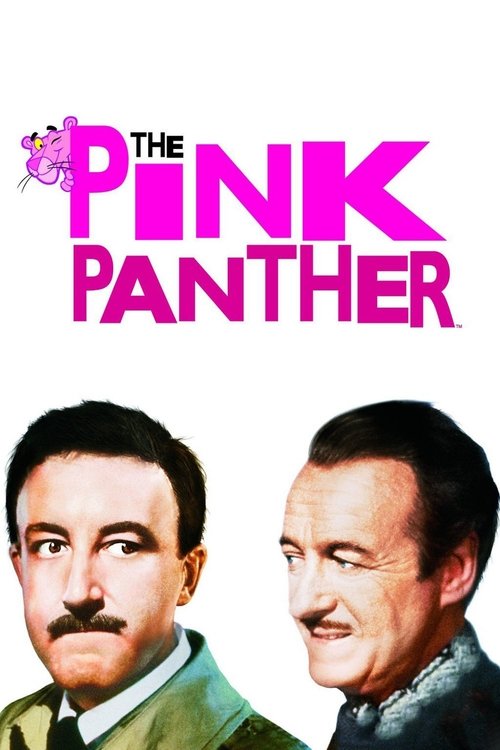
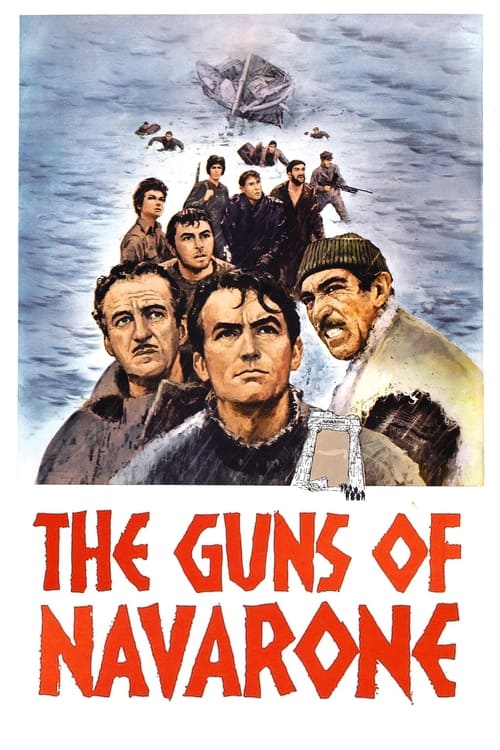
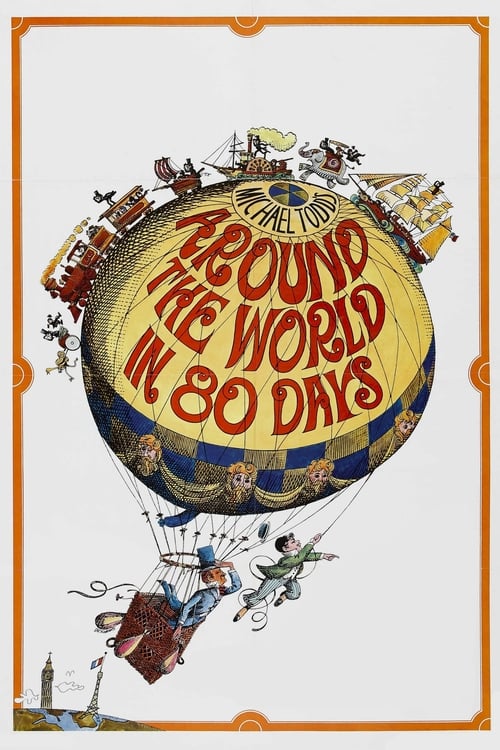
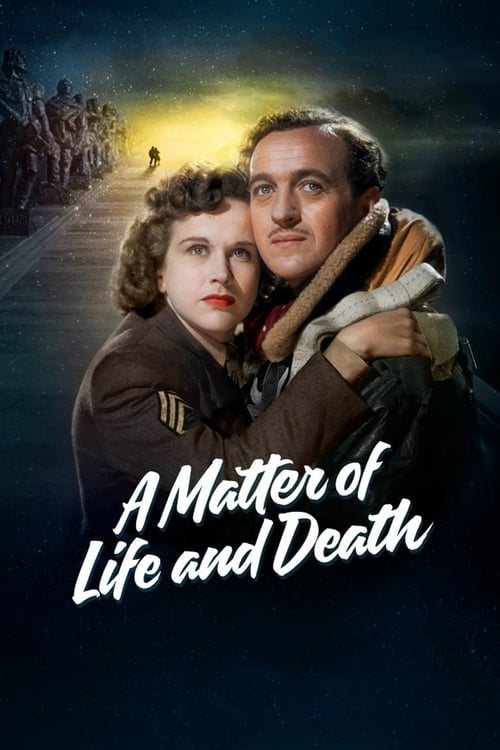
Niven went on to receive the Academy Award for Best Actor for his role in Separate Tables (1958), for which he holds the record of shortest winning performance in that category (at 23 minutes and 39 seconds). His other notable films during this time period include A Matter of Life and Death (1946), The Bishop's Wife (1947), Enchantment (1948), The Elusive Pimpernel (1950), The Moon Is Blue (1953), Around the World in 80 Days (1956), My Man Godfrey (1957), The Guns of Navarone (1961), Murder by Death (1976), and Death on the Nile (1978). He also earned acclaim and notoriety playing Sir Charles Lytton in The Pink Panther (1963) and James Bond in Casino Royale (1967).
Contents
Early life and family
James David Graham Niven was born on 1 March 1910 at Belgrave Mansions, Grosvenor Gardens, London, to William Edward Graham Niven (1878–1915) and his wife, Henrietta Julia (née Degacher) Niven (1878–1932). He was named David after his birth on St David's Day. Niven later claimed he was born in Kirriemuir, in the Scottish county of Angus in 1909, but his birth certificate disproves this. He had two older sisters and a brother: Margaret Joyce Niven (1900–1981), Henry Degacher Niven (1902–1953), and the sculptor Grizel Rosemary Graham Niven (1906–2007), who created the bronze sculpture Bessie that is presented to the annual winners of the Women's Prize for Fiction.
Niven's father, William Niven, was of Scottish descent; he was killed in the First World War serving with the Berkshire Yeomanry during the Gallipoli campaign on 21 August 1915. He is buried in Green Hill Cemetery, Turkey, in the Special Memorial Section in Plot F. 10. Niven's paternal great-grandfather and namesake, David Graham Niven, (1811–1884) was from
St Martins, a village in Perthshire. A physician, he married in Worcestershire, and lived in Pershore.
Niven's mother, Henrietta, was born in Brecon, Wales. Her father was Captain (brevet Major) William Degacher (1841–1879) of the 1st Battalion, 24th Regiment of Foot, who was killed at the Battle of Isandlwana during the Anglo-Zulu War in 1879. Although born William Hitchcock, in 1874, he and his older brother Lieutenant Colonel Henry Degacher (1835–1902), both followed their father, Walter Henry Hitchcock, in taking their mother's maiden name of Degacher. Henrietta's mother was Julia Caroline Smith, the daughter of Lieutenant General James Webber Smith CB.
After her husband's death in Turkey in 1915, Henrietta Niven remarried in London in 1917 to Conservative politician and diplomat Sir Thomas Walter Comyn-Platt (1869–1961). David and his sister Grizel were close, and both loathed Comyn-Platt. The family moved to Rose Cottage in Bembridge on the Isle of Wight after selling their London home. In his 1971 memoir, The Moon's a Balloon, Niven wrote fondly of his childhood home:
It became necessary for the house in London to be sold and our permanent address was now as advertised—a cottage which had a reputation for unreliability. When the East wind blew, the front door got stuck and when the West wind blew, the back door could not be opened—only the combined weight of the family seemed to keep it anchored to the ground. I adored it and was happier there than I had ever been, especially because, with a rare flash of genius, my mother decided that during the holidays she would be alone with her children. Uncle Tommy [Comyn-Platt] was barred—I don't know where he went—to the Carlton Club I suppose.
Career
Military service
From 1928, Niven attended the Royal Military College, Sandhurst. He did well at Sandhurst, which gave him the "officer and gentleman" bearing that was his trademark. He requested assignment to the Argyll and Sutherland Highlanders or the Black Watch (Royal Highland Regiment), then jokingly wrote on the form, as his third choice, "anything but the Highland Light Infantry" (because that regiment wore tartan trews rather than the kilt). Having completed his training, he was commissioned as a second lieutenant in the British Army on 30 January 1930, and assigned to the Highland Light Infantry (HLI). He served with them for two years in Malta and then for a few months in Dover. In Malta, he became friends with the maverick Michael Trubshawe, and served under Roy Urquhart, future commander of the British 1st Airborne Division. On 21 October 1956, in an episode of the game show What's My Line?, Niven, as a member of the celebrity panel, was reacquainted with one of his former enlisted men. Alexander McGeachin was a guest and when his turn in the questioning came up, Niven asked, "Were you in a famous British regiment on Malta?" After McGeachin affirmed that he was, Niven quipped, "Did you have the misfortune to have me as your officer?" At that point, Niven had a brief but pleasant reunion.
Niven grew tired of the peacetime army. Though promoted to lieutenant on 1 January 1933, he saw no opportunity for further advancement. His ultimate decision to resign came after a lengthy lecture on machine guns, which was interfering with his plans for dinner with a particularly attractive young lady. At the end of the lecture, the speaker (a major general) asked if there were any questions. Showing the typical rebelliousness of his early years, Niven asked, "Could you tell me the time, sir? I have to catch a train."
Lieutenant Niven resigned his commission on 6 September 1933.
Film career
When Niven presented himself at Central Casting, he learned that he needed a work permit to reside and work in the United States. Since this required leaving the US, he went to Mexico, where he worked as a "gun-man", cleaning and polishing the rifles of visiting American hunters. He received his resident alien visa from the American consulate when his birth certificate arrived from Britain. He returned to the US and was accepted by Central Casting as "Anglo-Saxon Type No. 2,008." Among the initial films in which he can be seen are Barbary Coast (1935) and Mutiny on the Bounty (1935). He secured a small role in A Feather in Her Hat (1935) at Columbia before returning to Metro-Goldwyn-Mayer for a bit role, billed as David Nivens, in Rose Marie (1936).
Niven's role in Mutiny on the Bounty brought him to the attention of independent film producer Samuel Goldwyn, who signed him to a contract and established his career. For Goldwyn, Niven again had a small role in Splendor (1935). He was lent to MGM for a minor part in Rose Marie (1936), then a larger one in Palm Springs (1936) for Paramount Pictures. His first sizable role for Goldwyn came in Dodsworth (1936). In that same year he was again loaned out, to 20th Century Fox to play Bertie Wooster in Thank You, Jeeves! (1936), before landing a significant role as a soldier in The Charge of the Light Brigade (1936) at Warner Brothers, an Imperial adventure film starring his housemate at the time, Errol Flynn. Niven was fourth billed in Beloved Enemy (1936) for Goldwyn, supporting Merle Oberon with whom he was romantically involved. Universal Pictures used him in We Have Our Moments (1937) and he had a good supporting role in David O. Selznick's The Prisoner of Zenda (1937).
Fox Studios gave him the lead in a B picture, Dinner at the Ritz (1938), and he again had a supporting role in Bluebeard's Eighth Wife (1938) directed by Ernst Lubitsch at Paramount. Niven was one of the four heroes in John Ford's Four Men and a Prayer (1938), also with Fox. He remained with Fox to play the part of a fake love interest in Three Blind Mice (1938). Niven joined what became known as the Hollywood Raj, a group of British actors in Hollywood which included Gladys Cooper, Cedric Hardwicke, Boris Karloff, Stan Laurel, Basil Rathbone, Ronald Colman, Leslie Howard, and C. Aubrey Smith.
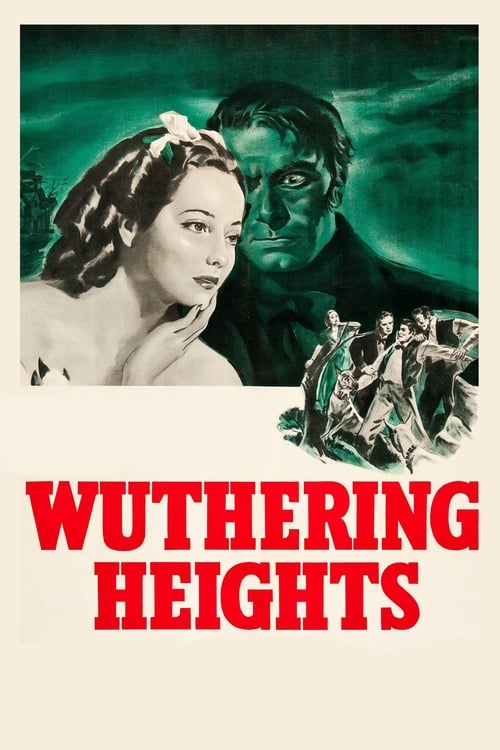
Niven graduated to star parts in "A" films with The Dawn Patrol (1938) remake at Warners; although he was billed below Flynn and Rathbone, it was a leading role and the film did excellent business. Niven was reluctant to take part in Wuthering Heights (1939) for Goldwyn, but eventually relented and the film was a big success. RKO borrowed him to play Ginger Rogers's leading man in the romantic comedy Bachelor Mother (1939), which was another big hit. Goldwyn used him to support Gary Cooper in the adventure tale The Real Glory (1939), and Walter Wanger cast him opposite Loretta Young in Eternally Yours (1939). Finally, Goldwyn granted Niven a lead part in a major film, the title role as the eponymous gentleman safecracker in Raffles (1939).
Writing
Niven wrote four books. The first, Round the Rugged Rocks, was a novel that appeared in 1951, when his film career was at its nadir, and was forgotten immediately. The plot was plainly autobiographical (although not recognised as such at the time of publication), involving a young soldier, John Hamilton, who leaves the British Army, becomes a liquor salesman in New York, is involved in indoor horse racing, goes to Hollywood, becomes a deckhand on a fishing boat, and finally ends up as a highly successful film star.
In 1971, he published his autobiography, The Moon's a Balloon, selling over five million copies. He followed this with Bring On the Empty Horses in 1975, a collection of entertaining reminiscences from the Golden Age of Hollywood in the 1930s and 1940s. As a raconteur rather than an accurate memoirist, Niven recounted some incidents from a first-person perspective that happened to other people, among them Cary Grant. This borrowing and embroidering of his personal history was also said to be the reason why he persistently refused to appear on This Is Your Life. Niven's penchant for exaggeration is particularly apparent when comparing his written descriptions of his early film appearances (especially Barbary Coast and A Feather in her Hat), and his Oscar acceptance speech, to the filmed evidence. In all three examples, the reality differs from Niven's accounts as presented in The Moon's a Balloon and related in various chat show appearances.
In 1981 Niven published a second and much more successful novel, Go Slowly, Come Back Quickly, which was set during and after the Second World War, and which drew on his experiences during the war and in Hollywood.
Personal life
While on leave in 1940, Niven met Primula "Primmie" Susan Rollo (18 February 1918 – 21 May 1946), the daughter of London lawyer William H.C. Rollo. After a whirlwind romance, they married on 16 September 1940. A son, David Jr., was born in December 1942 and a second son, James Graham Niven, on 6 November 1945. Primmie died at the age of 28, six weeks after the family moved to the US. She fractured her skull in a fall in the Beverly Hills home of Tyrone Power and Annabella, while playing a game of sardines. She had walked through a door believing it to be a closet, but instead, it led to a stone staircase to the basement.
In 1948, Niven met and married Hjördis Paulina Tersmeden (née Genberg, 1919–1997), a divorced Swedish fashion model. He recounted their meeting:
I had never seen anything so beautiful in my life – tall, slim, auburn hair, up-tilted nose, lovely mouth and the most enormous grey eyes I had ever seen. It really happened the way it does when written by the worst lady novelists ... I goggled. I had difficulty swallowing and had champagne in my knees.
According to friends, the relationship between Niven and Hjördis was turbulent.
In 1960, Niven bought a chalet in Château-d'Œx near Gstaad in Switzerland, living near expatriate friends including Deborah Kerr, Peter Ustinov, and Noël Coward. It is believed that Niven's choice to become a tax exile may have been one reason why he never received a British honour. However, Kerr, Ustinov, and Coward were honoured. A 2009 biography of Niven contained assertions that he had an affair with Princess Margaret, who was 20 years his junior. He also became close friends with William F. Buckley Jr. and his wife Pat; Buckley wrote a memorial tribute to him in Miles Gone By (2004).
Eventually Niven divided his time between his chalet in Château-d'Œx and his home at Cap Ferrat on the Côte d'Azur in the south of France.
Death and legacy
In 1978, Niven began experiencing weight loss, and by 1980 general fatigue, muscle weakness, and slurred speech. His interviews on the talk shows of Michael Parkinson and Merv Griffin alarmed family and friends; viewers wondered if Niven had either been drinking or suffered a stroke. He blamed his slightly slurred voice on the shooting schedule of the film he had been making, Better Late Than Never. He was diagnosed with ALS in 1980. His final appearance in Hollywood was hosting the 1981 American Film Institute tribute to his old friend Fred Astaire.
In February 1983, using a false name to avoid publicity, Niven was hospitalised for 10 days, ostensibly for a digestive problem. Afterwards, he returned to his chalet at Château-d'Œx. Though his condition continued to worsen, he refused to return to the hospital, a decision supported by his family. He died at his chalet on 29 July 1983, aged 73. Niven was buried on 2 August in the local cemetery of Château-d'Œx.
A thanksgiving service for Niven was held at St Martin-in-the-Fields, London, on 27 October 1983. The congregation of 1,200 included Prince Michael of Kent; Margaret Campbell, Duchess of Argyll; John Mills; Richard Attenborough; Trevor Howard; David Frost; Joanna Lumley; Douglas Fairbanks Jr.; and Laurence Olivier. Biographer Graham Lord wrote, "the biggest wreath, worthy of a Mafia Godfather's funeral, was delivered from the porters at London's Heathrow Airport, along with a card that read: 'To the finest gentleman who ever walked through these halls. He made a porter feel like a king.'"
In 1985, Niven was included in a series of British postage stamps, along with Alfred Hitchcock, Charles Chaplin, Peter Sellers, and Vivien Leigh, to commemorate "British Film Year". Niven's appearance was the inspiration for that of Commander Norman in the Thunderbirds franchise, as well as DC Comics villain Sinestro.
Niven's Bonjour Tristesse co-star, Mylène Demongeot, declared about him in a 2015 filmed interview:He was like a Lord, he was part of those great actors who were extraordinary like Dirk Bogarde, individuals with lots of class, elegance and humour. I only saw David get angry once. Preminger had discharged him for the day but eventually asked to get him. I said, sir, you had discharged him, he left for Deauville to gamble at the casino. So we rented a helicopter so they immediately went and grabbed him. Two hours later, he was back, full of rage. There I saw David lose his British phlegm, his politeness and class. It was royal. [Laughs].