Career
Berri's original vocation was to be an actor. He began a career in the early 1950s but struggled to find roles, which prompted him to turn to directing and eventually producing. In 1965, he gained notice for The Chicken, which won the Award for best short film at the 38th Academy Awards.
In 1967, Berri directed The Two of Us (Le Vieil homme et l'enfant), a partially autobiographical film that told the story of a Jewish child, entrusted during World War II to a benevolent and antisemitic old farmer who remains unaware that the boy he is caring for is a Jew. The film was a great success in France and abroad. Berri also adapted the story into a novel, released the same year as the film.
During the years that followed, Berri became active as a producer and film distributor while continuing to direct his own films. Also in 1967, with his associate (later brother-in-law) Jean-Pierre Rassam, Berri bought the international distribution rights for Miloš Forman's The Firemen's Ball which was a great success and was nominated to the Academy Award for Best International Feature Film. Berri's company, Renn Productions, which he had founded to produce The Two of Us, gradually became a major player in the French film industry.
Whereas Berri's films as a director were not major box-office successes during the 1970s, he was more fortunate as a producer. He notably associated himself with Christian Fechner to produce Claude Zidi's successful comedies, including those starring the comedy team Les Charlots who were then particularly popular in France. He also produced films starring Pierre Richard, then France's new comedy star, directed by Richard himself or by Zidi. While enjoying box-office success as a producer or co-producer of comedies, Berri was also involved in producing more challenging avant-garde films, such as Jean Eustache's The Mother and the Whore (1973) or Jacques Rivette's Céline and Julie Go Boating (1974). In 1979, he produced Roman Polanski's Tess (1979), which won the César Award for Best Film in 1980 and was nominated in 1981 to the Academy Award for Best Picture.
Throughout his directing and producing career, Berri appeared occasionally as an actor, in his own films or in those of other directors. He played starring roles in five of his films, Mazel Tov ou le Mariage (1968), Le Cinéma de papa (1971), Sex Shop (1972), Le Mâle du siècle (1975) and La Débandade (1999). Most of his other appearances were supporting parts or cameos, one notable exception being a starring role in Serge Gainsbourg's Stan the Flasher (1989).
Most of Berri's earlier films as a director were comedies, until the melancholic romance film Je vous aime (1980), starring Catherine Deneuve, which was inspired by the separation from his wife. Berri later said that he had become less interested in directing comedies following the illness of his first wife, as his personal life was no longer a source of inspiration and amusement.
During the 1980s, Berri had a successful association with comedian Coluche: in 1980, he produced Inspector Blunder, Coluche's return to film, which was a commercial hit. Berri directed Coluche himself in the comedy Le Maître d'école (1981), and produced his next two vehicles, Quarter To Two B.C. (1982) and Banzaï (1983). In 1983, Berri directed the crime drama So Long, Stooge (Tchao Pantin) starring Coluche in his first dramatic role. At the time, a review in Le Monde praised Berri's evolution as a director formerly known for his lightweight comedies, and described the film as a return to poetic realism. So Long, Stooge was a box-office hit and received twelve nominations at the César Awards, with Coluche winning the César Award for Best Actor.
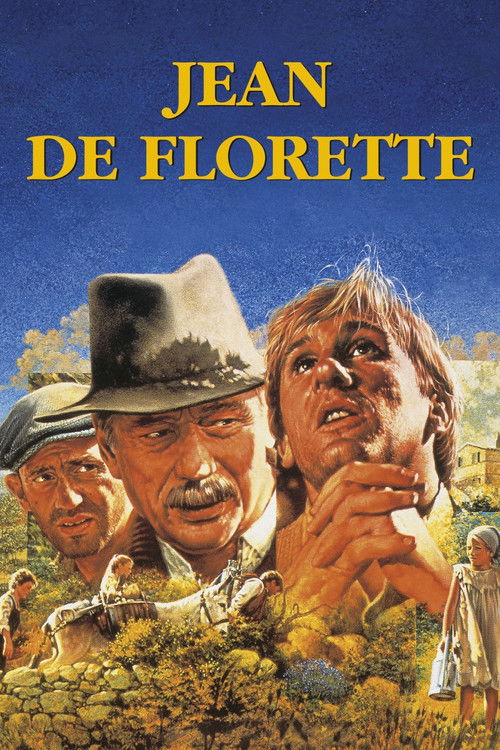
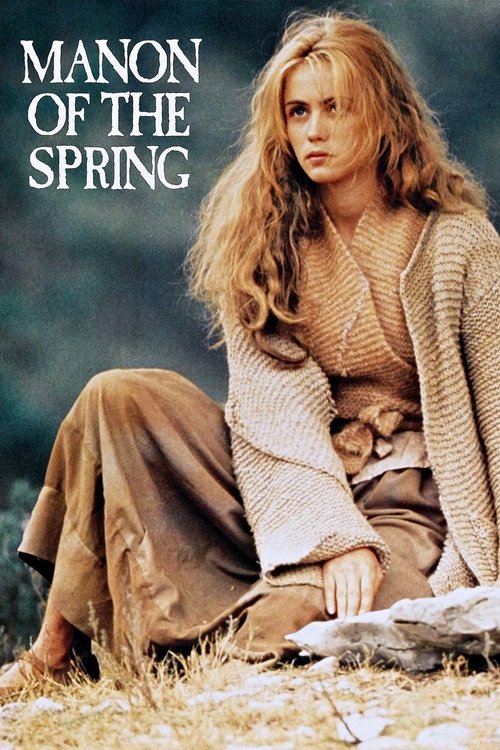
Berri next directed and produced a series of successful adaptations of French classic novels. In 1986, he made the two-part film that constitutes his best-known work, Jean de Florette and its sequel, Manon of the Spring (Manon des Sources), based on Marcel Pagnol's two-volume novel. Both films, who were at the time the French film industry's most expensive project ever, were huge international hits.
In 1990, Berri directed Uranus, based on Marcel Aymé's novel. The film, a dark satire of postwar France, was entered into the 41st Berlin International Film Festival. In 1993, he made Germinal, based on Émile Zola's classic novel. Like his 1986 Jean de Florette/Manon des sources project, Berri's Germinal was at the time the highest budget in the history of French cinema.
In 1997, Berri's film Lucie Aubrac, based on the eponymous resistance heroin's memoir, was entered into the 47th Berlin International Film Festival.
In 2003, he was elected as president of the Cinémathèque française where he obtained enough state subsidies to cover the costs of its resurgence at its new site in the rue de Bercy.
Berri's box-office successes as a producer include Jean-Jacques Annaud's The Bear (1988) and The Lover (1992) and Patrice Chéreau's La Reine Margot (1994). He also produced the first two live-action films of the Asterix franchise, Asterix and Obelix vs. Caesar (1999) and Asterix & Obelix: Mission Cleopatra (2002), the latter of which became one of the most commercially successful French films ever. Berri had been initially reluctant to work on a comic book adaptation until his son Thomas Langmann convinced him to produce the Asterix films.
In 2004, the big-budget action comedy San-Antonio was a box-office disaster, severely impacting Berri's production company. Berri had to rely on a €2 million loan from his partner Nathalie Rheims to keep his business afloat. The next year, Berri sold his remaining shares in Renn Productions to Pathé, shortly after initiating two major film projects, Abdellatif Kechiche's The Secret of the Grain (2007) and Dany Boon's Welcome to the Sticks (2008). The latter film's success, in particular, allowed him to pay off his debts for San-Antonio.
Berri won the BAFTA Award for Best Film in 1987 for Jean de Florette. In France, he was nominated for twelve César Awards, including the César Award for Best Film and the César Award for Best Director, though he never won.