Television
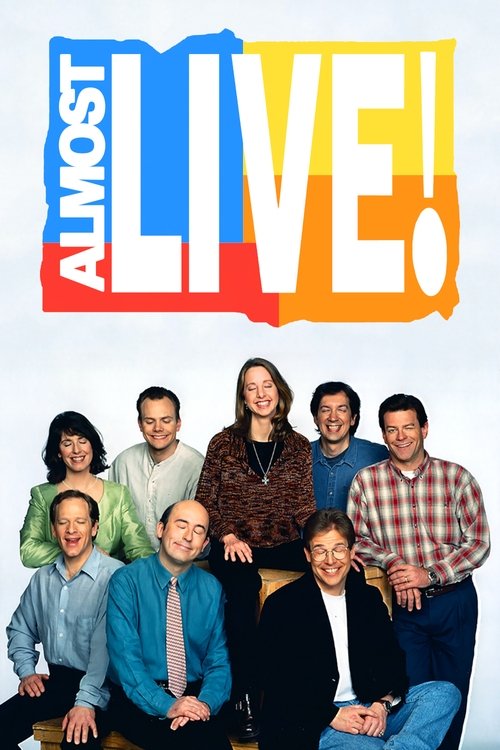
In 1986, Nye worked as a writer/actor on a local sketch comedy television show in Seattle called Almost Live! He first got his big break on the show from John Keister who met him during an open mic night. After a guest canceled, cohost Ross Shafer told Nye he had seven minutes of programming to fill. "Why don't you do that science stuff?" Shafer suggested. Nye entertained audiences with comical demonstrations, including what happened when you ate a marshmallow that had been dipped in liquid nitrogen. His other main recurring role on Almost Live! was as Speed Walker, a speedwalking Seattle superhero "who fights crime while maintaining strict adherence to the regulations of the international speedwalking association."
A famous incident on the show led to Nye's stage name. He corrected Keister on his pronunciation of the word "gigawatt", and Keister responded, "Who do you think you are—Bill Nye the Science Guy?" Nye's science experiments resonated with viewers, and the local chapter of the National Academy of Television Arts and Sciences awarded him a talent Emmy for one of his segments. He later hosted a weekly radio show on KJR in 1988 that answered listener questions about science topics.
Even though Nye was a regular on Almost Live!, he was only doing freelance work for the program. While looking for more TV gigs, he got the opportunity in 1989 to host Fabulous Wetlands, a short educational show about Washington's wetlands, sponsored by the Washington State Department of Ecology. On Fabulous Wetlands, Nye explained the importance of preserving estuaries, and the hazards of pollution. The show was, in many ways, a model for Nye's later show, with "zany camera cuts paired with Nye's humor" that set it apart from other scientific broadcasts. Nye soon got more offers to appear on nationally broadcast programs, including eight segments of the Disney Channel's All-New Mickey Mouse Club. Following his stint on Almost Live!, from 1991 to 1993 Nye appeared on live-action educational segments of Back to the Future: The Animated Series, assisting Dr. Emmett Brown (played by Christopher Lloyd). He was a member of the Seattle Bicycle Advisory Board from 1992 to 1994.
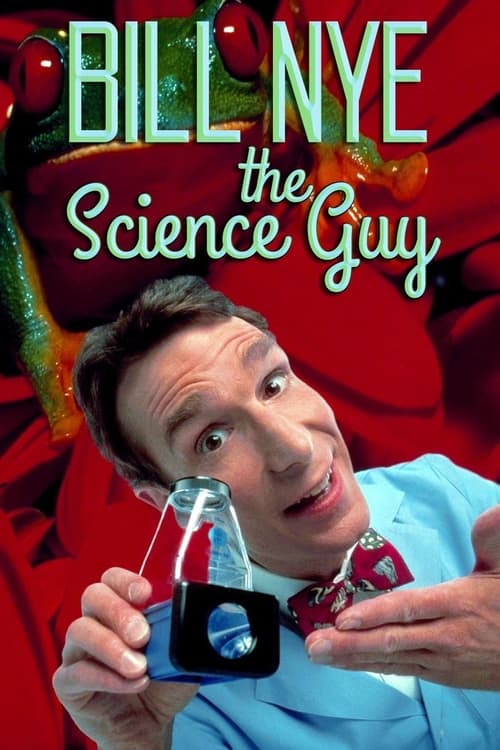
In 1993, collaborating with James McKenna, Erren Gottlieb and Elizabeth Brock, Nye developed a pilot for a new show, Bill Nye the Science Guy, for the Seattle public broadcasting station KCTS-TV. They pitched the show as "Mr. Wizard meets Pee-wee's Playhouse". Nye obtained underwriting for the show from the National Science Foundation and the US Department of Energy. The program became part of a package of syndicated series that local stations could schedule to fulfill Children's Television Act requirements. Because of this, Bill Nye the Science Guy became the first program to run concurrently on public and commercial stations. The series was produced by Walt Disney Television and Rabbit Ears Productions, and distributed by Disney.
Bill Nye the Science Guy ran from 1993 to 1998, and was one of the most-watched educational TV shows in the United States. While portraying "The Science Guy", Nye wore a powder blue lab coat and a bow tie. Nye Labs, the production offices and set where the show was recorded, was in a converted clothing warehouse in Seattle's Pioneer Square neighborhood. Although it focused on younger viewers, it also attracted a significant adult audience. Its ability to make science entertaining and accessible made it a popular teaching tool in classrooms. With its quirky humor and rapid-fire MTV-style pacing, the show won critical acclaim and was nominated for 23 Emmy Awards, winning nineteen. Research studies found that regular viewers were better at explaining scientific ideas than non-viewers.
In addition to the TV show, Nye published several books as The Science Guy. A CD-ROM based on the series, titled Bill Nye the Science Guy: Stop the Rock!, was released in 1996 for Windows and Macintosh by Pacific Interactive. Nye's Science Guy personality is also prominent at Walt Disney Parks and Resorts—most notably his appearance with Ellen DeGeneres at Ellen's Energy Adventure, an attraction that ran from 1996 to 2017 at the Universe of Energy pavilion at Epcot at Walt Disney World. Nye's Science Guy character was also heard in a voice-over in the queue for the DINOSAUR attraction at Disney's Animal Kingdom, and was the on-air spokesman for the Noggin television network in 1999.
Following the success of Bill Nye the Science Guy, Nye began work on a comeback project, The Eyes of Nye, aimed at an older audience and tackling more controversial science topics such as genetically modified food, global warming and race. However, "shifting creative concepts, infighting among executives and disputes over money with Seattle producing station KCTS significantly delayed production for years. KCTS was hampered by budgetary problems and couldn't produce a show pilot on time. "KCTS went through some distress", Nye recalled. "When we did The Eyes of Nye, the budget started out really big, and by the time we served all these little problems at KCTS, we had a much lower budget for the show than we'd ever had for the 'Science Guy' show which was made several years earlier."
PBS declined to distribute The Eyes of Nye, and it was eventually picked up by American Public Television. "PBS wanted more serious, in-depth Nova-style shows", explained co-producer Randy Brinson. The show, which eventually premiered in 2005, lasted only one season. Nye acknowledged that omitting his bow tie on the program was a mistake. "I tried wearing a straight tie. It was nothing", Nye said. "We were trying something new. It wasn't me."
Nye hosted the short-form series Why with Nye for NASA TV in the early 2010s, a series discussing the Juno mission to Jupiter.
On August 31, 2016, Netflix announced that Nye would appear in a new series, Bill Nye Saves the World, which premiered on April 21, 2017. Its third and final season was released on May 11, 2018. His next series, The End is Nye, was ordered by Peacock in March 2021. Teaming up with Seth MacFarlane and Brannon Braga, the series has Nye exploring natural and unnatural disasters, explaining them scientifically to detail surviving, mitigating, and preventing them. It premiered on August 25, 2022, with six episodes.