Benny Urquidez (born June 20, 1952) is an American former professional kickboxer, martial arts choreographer and actor. Nicknamed "The Jet", Urquidez was a non-contact karate competitor who later pioneered full-contact fighting in the United States. He made the transition from point to full-contact karate in 1974, the year of its inception in the US, frequently fighting in bouts where the rules were ambiguous and contrasts in styles were dramatic. Urquidez is also known for once holding the rare achievement of six world titles in five different weight divisions, and remained largely undefeated in his 27-year career. His only loss came in a Muay Thai match which was shrouded in controversy, as Urquidez had only agreed to a no-decision exhibition, a clause that was ignored when the fight was over.
Between 1974 and 1993, he amassed a documented professional record of 49–1–1 (win-loss-draw) with 35 knockouts and two controversial no-contests, although he is also supposed to have an additional record of 10–0–1 (10 KOs) in undocumented professional fights, making a total of 59–1–2–2 (45 KOs). However, sources vary, with Ratings listing Urquidez as 63–0–1, (57 knockouts) and on his own official webpage, Urquidez lists his fight record as 200–0, and says he was 63–0, with 57 knockouts in title defenses. Also, he claims to have been undefeated in the "Adult Black Belt Division" prior to entering full-contact karate. Black Belt magazine voted Urquidez "Competitor of the Year" in 1978. In 2019, he was inducted into the International Sports Hall of Fame.
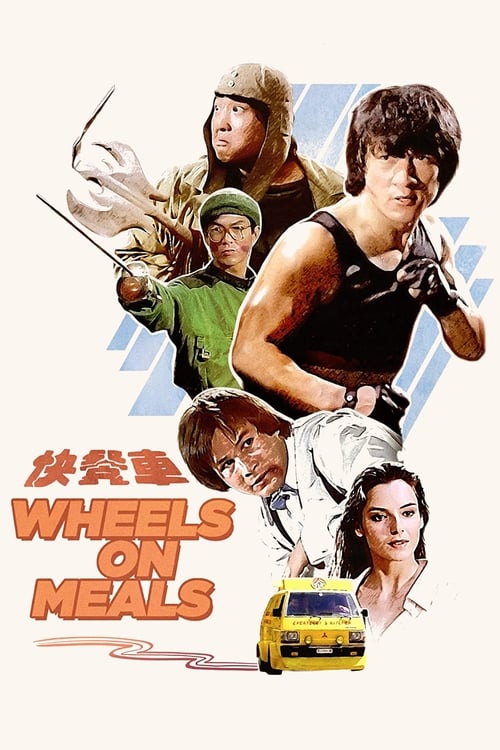
He has appeared in occasional acting roles, including the Jackie Chan movies Wheels on Meals (1984) and Dragons Forever (1988), and played a hitman in George Armitage's Grosse Pointe Blank (1997).
Contents
Early life, family and education
Urquidez was born in Los Angeles County, California, the son of a wrestling mother and a boxing father. His parents are of Spanish (Basque), Mexican and Blackfoot ancestry. He has said that his father was Spanish and his mother was Native American.
Benny began competing in 1958, at the age of five, in "peewee" boxing and wrestling in Los Angeles. His martial arts instruction started when he was seven years old (1959); his first formal teacher was Bill Ryusaki. Urquidez received his black belt at the age of 14 (1966), a highly unusual feat in the 1960s. His siblings also achieved the rank of black belt. His sister Lilly Rodriguez was a pioneer in kickboxing for women, and their late brother Reuben Urquidez appeared with Benny in a documentary on the combination martial art budojujitsu.
Career
At the age of 12, Urquidez attended the Long Beach International Karate Championships in 1964. He witnessed a demonstration by Bruce Lee, including the one-inch punch which sent a 245-pound man flying back. This demonstration by Lee inspired a young Urqidez to start entering martial arts tournaments.
He entered the point circuit in 1964 and earned a reputation as a colorful fighter. At the 1972 Santa Monica Kenpo Open, Urquidez lost in the finals to Brian Strian. In the 1973 Internationals, he fought John Natividad in what is considered one of the greatest non-contact bouts in history. In an unprecedented 25-point overtime match, Natividad won the match 13–12, receiving the Grand Title and the $2,500 purse. In May 1974, at the PAWAK Tournament, Urquidez lost a 4–1 decision to Joe Lewis. He also competed in England and Belgium as a member of Ed Parker's 1974 US team. Also in 1974, he began his move away from the non-contact style by entering and winning the World Series of Martial Arts Championship, effectively a tough-man contest with few rules. Over the next two decades, he fought under various kickboxing organizations (NKL, WPKO, Professional Karate Association (PKA), World Kickboxing Association (WKA), AJKBA, Shin-Kakutojutsu Federation, NJPW and MTN) to amass a record of 58 wins with no losses. This undefeated record, though official, is controversial and highly disputed.
In 1977, Urquidez traveled to Japan and fought under the WKA's compromise US–Japan rules which included leg kicks and knees to the body. He defeated Katsuyuki Suzuki by KO in the sixth round as part of a professional wrestling event in which Antonio Inoki fought Everett Eddy in what was said to be a wrestler/karate fighter mixed match but was a pre-determined pro wrestling match. The Suzuki fight materialized because the newly formed WKA organization could not compete against the PKA in the US. At the same time, Japanese professional wrestler Antonio Inoki, who gained the worldwide fame by fighting Muhammad Ali in the controversial 1976 boxer/wrestler mixed-match in Japan, had been looking for new opponents for what he called the world martial arts championship series. Eventually, promoter Ron Holmes discovered Everett Eddy for Inoki. By that time, Eddy had been coached by Arnold Urquidez, and lost in a knockout in the 1st round to PKA world heavyweight champion Ross Scott in the previous year. In the same event, Benny Urquidez knocked out Howard Jackson, but soon his lightweight title was stripped by the PKA, and so both Eddy and Urquidez had no action in the US, and had to look for fights overseas. Even though the Inoki/Eddy bout was successful, it was the fight between Urquidez and Suzuki, which shocked Japan, where Japanese kickboxing had been very popular. Though never tested for or achieved any rank in Japanese karate, Urquidez has decided to bestow upon himself the title of sensei, a Japanese honorific term which is given to experts and instructors meaning: "someone who precedes you in knowledge".
Controversies
Varied fights
Benny Urquidez was the first kickboxing champion with an international profile who also operated as a free agent under different rules for different sanctions. Consequently, he fought in several unorthodox match-ups and hotly disputed bouts. In late 1974, in the grand finale of an early mixed martial arts-style tough man contest in Honolulu, Hawaii, a 5 ft 6 in (1.68 m), 145 lb (66 kg) Urquidez decisioned a 6 ft 1 in (1.85 m), 230 lb (100 kg) Dana Goodson after scoring a takedown and pin against Goodson in the third and final round.
A year later, in Detroit, Urquidez was disqualified for knocking out his opponent with a fourth punch under the subsequently-discontinued three-punch rule. The disqualifying referee was the opponent's own karate instructor. The bout was excoriated on network television, prompting state athletic commissions across the United States to become interested in regulating the sport. Chuck Norris' short-lived International Karate League (IKL) and later the STAR System world ratings reversed this outcome.
Another three bouts were eventually ruled no-contests (NC). The first, in Los Angeles on March 12, 1977, was a nine-round NC (WKA) against Thai boxer Narongnoi Kiatbandit as part of the inaugural WKA world title event. Urquidez scored flash-knockdowns against Narongnoi in rounds three and six as well as five legal throws over three other rounds. Narongnoi was warned for illegal knee kicks and groin attacks on four occasions before being assessed with a point deduction in round nine. However, the point deduction came shortly after Narongnoi had scored his sole flash-knockdown which, in turn, provoked a riot among Muay Thai fans in the audience. The audience invaded the ring moments before the final bell. Scores were never collected for round nine. The California State Athletic Commission declared the bout a no-contest.
Next, on April 29, 1978, Urquidez faced his fourth Japanese opponent Shinobu Onuki in Tokyo; the event was co-promoted by the AJKBA and Shin-Kakutojutsu Federation. Eventually, Urquidez executed a throw that dislocated Onuki's shoulder. Initially, because of the throw, Urquidez was given a TKO loss. However, the promoters acknowledged that Urquidez used the throw without knowing it was illegal under Japanese rules; the bout was then scored as a no-contest. Following this unsatisfactory result, the two faced each other again in Las Vegas on January 2, 1980. The fight was aired by NBC, and this time Urquidez knocked out Onuki with a left hook to the body. Later, in October 1981, when the AJKBA merged with the WKA, the WKA transmuted the original Onuki no-contest to a TKO victory for Urquidez because, in fact, Urquidez's fight contract had permitted throws.
Gracie Challenge
In September 1994, Urquidez revealed he had been challenged by Rorion Gracie for a mixed martial arts bout as part of the Gracie Challenge. He claimed to have backed down from the fight, considering it to be just a promotional stunt, due to Rorion demanding to fight for free after having negotiated for a fight purse. In response, in November of the same year, Rorion's brother Royce Gracie challenged Urquidez himself, which Benny rejected on the grounds of being retired.
Months later, Royce Gracie wrote an attack piece printed in Black Belt magazine titled "Message for Urquidez: Actions Speak Louder Than Words" in which he voiced his issues with Urquidez, criticizing Urquidez for not submitting to the Gracies' demands for a fight; Gracie alleged that Rorion had dominated Urquidez in a training bout at Urquidez's Jet Center gym in 1978, taking him down "several times" without being touched. Although Gracie went on to state that "that's how the whole Gracie rivalry with Benny started", he went on to accuse Urquidez of having said he would "help Rorion", but not following through on the offer. He also claimed Urquidez only wanted to fight under kickboxing rules, to lessen the chance of being defeated, and that Rorion refused on the grounds that he was "not a kickboxer". None of Gracie's claims were independently verified.
Movie roles
Urquidez has played a number of roles in various martial arts movies. The first was Force: Five (1981), starring Joe Lewis and Bong Soo Han. Later, he made two movies with Jackie Chan, Wheels on Meals (1984) and Dragons Forever (1988), wherein he fights against the characters played by Jackie Chan, Sammo Hung and Yuen Biao. Urquidez is depicted as a relentlessly tough opponent who is defeated in the climactic fight scenes of both movies. His final fight with Chan in Wheels on Meals is considered to be among the finest fights of Chan's career, including by Chan himself.
Urquidez cameoed as a kickboxer in the Troma film Ragin' Cajun. The movie, filmed in 1988 and released in 1991, wrongfully asserted that it featured Urquidez's first film appearance, stating in the opening credits, "Introducing Benny 'The Jet' Urquidez". He appeared in the 1989 film Roadhouse as one of the fighters seen at a car dealership which is partially destroyed in elaborately choreographed mayhem. He trained Patrick Swayze in his own fighting techniques for the film. Urquidez appears in the 1991 film Blood Match, and in 1992, he played a referee in the James Woods and Louis Gossett Jr. film Diggstown. He has a cameo appearance in the movie Street Fighter (1994), playing one of several prisoners put in a truck with Ken, Ryu, Sagat and Vega. Urquidez was also responsible for the physical training of most of the Street Fighter cast. He was set to play a different character in the franchise, Raven, in a game based on the movie, but the character was later scrapped.
Urquidez performed in the film Grosse Pointe Blank (1997) as Felix La Poubelle, a hitman sent to kill a character played by John Cusack. He appeared in 1408 (2007) as a spectral killer with a hammer, again with Cusack. Urquidez is Cusack's long-time kickboxing trainer. Urquidez also appeared as one of several thugs who accost Kirsten Dunst's character in the first Spider-Man film during an attempted robbery; Urquidez plays the thug wearing a black-and-white-striped T-shirt who makes kissing noises at Dunst.
He was a fight coordinator for an episode of the television drama Criminal Minds, "The Bittersweet Science" (season 7, episode 10), and also appears in the episode in a 30-second role as an underground MMA referee.
Titles and awards
World Kickboxing League W.K.L – Hall of Fame 2013
Black Belt Magazine
1978 Competitor of the Year
KATOGI
KATOGI super-lightweight (−63.6 kg) world champion (0 title defences – vacated): 1978
Muay Thai Bond Nederland
M.T.B.N. welterweight (−66 kg) world champion (0 title defences – vacated): 1984
National Karate League
N.K.L. lightweight (−70.5 kg) world champion (3 title defences – vacated): 1974–1975
Professional Karate Association
P.K.A. lightweight (−65.9 kg) world champion (2 title defences – vacated): 1976–1977
STAR System World Kickboxing Ratings
S.T.A.R. undisputed welterweight (−66.8 kg) world champion: 1985
S.T.A.R. undisputed super-welterweight (−70.5 kg) world champion: 1974
World Kickboxing Association
W.K.A. super-welterweight (−70 kg) world champion (0 title defences – vacated): 1993
W.K.A. welterweight (−66.8 kg) world champion (0 title defences – vacated): 1985
Kickboxing record
Note that the record below is the documented professional record of Benny Urquidez from the S.T.A.R. website. He also is believed to have 11 undocumented matches, winning 10, drawing one with all 10 victories by way of KO.