

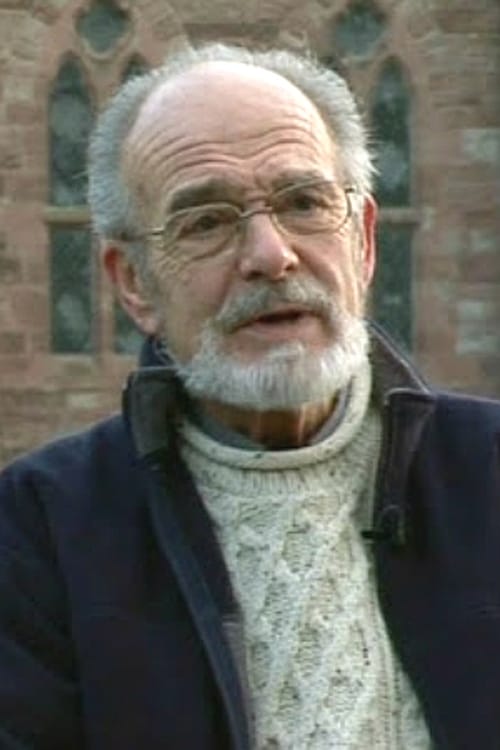
Barry Leopold Letts (26 March 1925 – 9 October 2009) was an English actor, television director, writer and producer, best known for being the producer of Doctor Who from 1969 to 1974.
Born in Leicester, he worked as an actor in theatre, films and television before retiring in his early forties and becoming a television director. He then became the producer of the BBC science fiction series Doctor Who for five years, overseeing almost the entirety of Jon Pertwee's tenure as the Third Doctor and casting Tom Baker as the Fourth Doctor. He produced or directed many of the BBC's Sunday Classic drama serials from 1976 to 1986, and returned to Doctor Who in 1980 to be the executive producer for its eighteenth season.
The Guardian described Letts on his death as "a pioneer of British television" who "served the medium for more than half a century" and "secured his place in TV history" with Doctor Who. He was associated with the series for many years, with active involvement in the television programme from 1967 to 1981 (as a director, producer, executive producer and writer) and with later contributions to its spin-offs in other media.
Contents
Early career
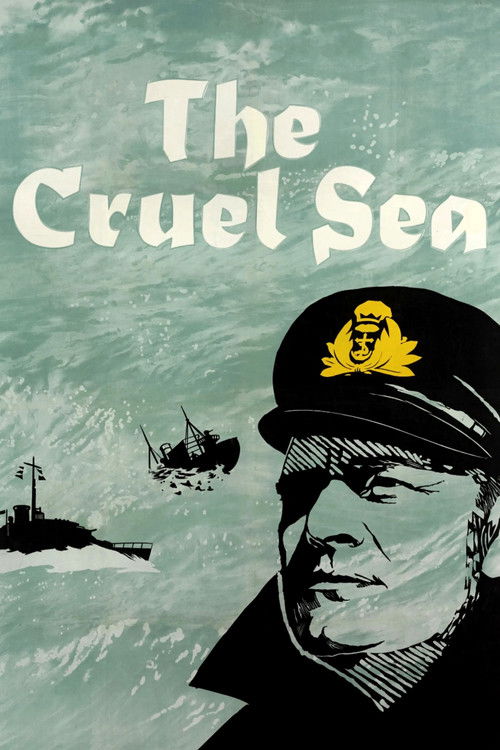
Letts was an assistant stage manager at Leicester's Theatre Royal in his teens and took up the job full-time after leaving Wyggeston Grammar School for Boys. His initial work was as a repertory actor, following his service as a Sub-Lieutenant in the Royal Navy during the Second World War. He later played one of the leading characters in the Terence Fisher directed film, To the Public Danger, a heartfelt plea against dangerous driving. He also appeared in the highly regarded Ealing Studios productions, Scott of the Antarctic and The Cruel Sea, in supporting roles.
From 1950 he appeared in various live television productions including Gunpowder Guy (broadcast on 5 November 1950) in which future Doctor Who actor Patrick Troughton played Guy Fawkes and Letts a fellow conspirator. He also appeared as Colonel Herncastle in the 1959 television adaptation of Wilkie Collins's novel The Moonstone, and played roles in The Last Man Out and The Avengers.
Much of his television work was for the BBC. Letts gave up his acting career after completing the BBC's director's course. His early directorial work included episodes of the long-running police drama Z-Cars and a soap opera, The Newcomers.
Doctor Who
Letts' first involvement with Doctor Who was in 1967 when he directed the Patrick Troughton serial The Enemy of the World. This was a complex serial to direct as Troughton played both the Doctor and the dictator "Salamander" in the same story and sometimes in the same scenes – a rare and demanding directorial requirement for the 1960s. However, in his memoir Who and Me, Letts related how he naively used matte boxes to allow Troughton to act face to face with himself, when in fact optical printing was already available and the same could have been accomplished in post-production.
He became the series' producer in October 1969, replacing Derrick Sherwin, with Jon Pertwee recently cast as the Doctor. Letts' first story as producer was Pertwee's second, Doctor Who and the Silurians, and he remained the producer for the rest of the Pertwee serials, becoming the father figure in the 'family' atmosphere that had developed on the show at that time. It was an era of substantial change for Doctor Who, with episodes broadcast in colour for the first time and an improved budget which enabled more location filming and action sequences than had previously been possible. Letts also embraced the technological innovations which came with moving the series into colour, most notably his enthusiasm for Colour Separation Overlay. He also oversaw the celebration of the programme's tenth anniversary in 1973, uniting the first three Doctors in the first multiple Doctor story, The Three Doctors.
When he took over, a recent BBC decision had cut the season length from over 40 episodes a year to 26. Notable changes Letts made, as related in his autobiography Who and Me, included producing the show in two-episode blocks, rather than as separate episodes: rehearsing two episodes for a fortnight, and then recording those two episodes back-to-back, thereby reducing the demands on the studio scenic crews, who only had to erect and strike the sets once a fortnight instead of once a week. This was a profoundly significant change: it allowed much more rehearsal time, in a much less frantic atmosphere; it ended a long running dispute with the unions representing the technical crews; it reduced wear-and-tear on the sets (and the budget allocations for repairing the damage); and it meant that, forever after, serials could only be made in multiples of 2 episodes—a primary reason for the 4-episode and 6-episode format dominating the schedules for the following fifteen years. He also retired the original howl-around title sequence used, with variations, from 1963 until 1973, introducing as its replacement the classic time tunnel special effects sequence which would run, until 1980, behind the opening and closing credits for every episode produced in seasons 11 to 17.
Later work
His other work included producing and co-creating the tv series Moonbase 3 with Terrance Dicks in 1973.
After leaving Doctor Who he remained with the BBC, doing a mixture of directing and producing. He directed for numerous series and serials (including on Doctor Who in 1975), before settling into the role of producer of the BBC's Sunday classic serials (where he appointed his friend and former Doctor Who collaborator, Terrance Dicks, as his script editor). He oversaw more than 25 serials in this capacity, over an 8-year period, including Nicholas Nickleby, Great Expectations, A Tale of Two Cities, Dombey and Son, The Hound of the Baskervilles (starring Tom Baker), The Invisible Man, Pinocchio, Gulliver in Lilliput, Alice in Wonderland, Lorna Doone, Little Lord Fauntleroy, The Children of the New Forest, Beau Geste and Sense and Sensibility. Many actors with whom he had worked on Doctor Who were to feature in these classic serials, including Tom Baker, Elisabeth Sladen, Caroline John, and Paul Darrow.
His final directing work was on the BBC soap opera EastEnders which he worked on periodically from 1990 to 1992. He also taught directing for the BBC at Elstree Studios.
He had a small cameo role in the film Exodus, broadcast on UK Channel 4.
His autobiography, Who and Me, was published posthumously in November 2009, then released as a talking book on CD, read by Letts himself, and later broadcast on BBC Radio 7.
Death
Letts suffered from cancer for many years before his death. His wife, Muriel, had died earlier in the year. Letts was survived by his three children: Dominic, Crispin and Joanna. His sons, Dominic and Crispin, had followed him into the acting profession.
Following Letts' death, Tom Baker was interviewed for BBC Radio 4's Last Word to pay tribute. He described Letts as "the big link in changing my entire life". Doctor Who executive producer Russell T Davies also wrote a personal tribute to him in issue No.415 of Doctor Who Magazine.
The November 2009 Doctor Who episode "The Waters of Mars" was dedicated to his memory. Issue No.417 of Doctor Who Magazine included a 12-page tribute to Letts and featured contributions from former colleagues including Frazer Hines, Mary Peach, Terrance Dicks, Nicholas Courtney, Graeme Harper, Katy Manning, Christopher Barry, Elisabeth Sladen and Baker.
It had been intended for Letts to attend the Doctor Who Appreciation Society's convention 'Time and Again' at Riverside Studios in Hammersmith that year, until it became clear his health would not allow this. He died shortly before the convention and as a small tribute the end credits of the recently recoloured Planet of the Daleks Part Three, shown at the event, were changed to end with an 'In Memory of Barry Letts 1925–2009' caption.