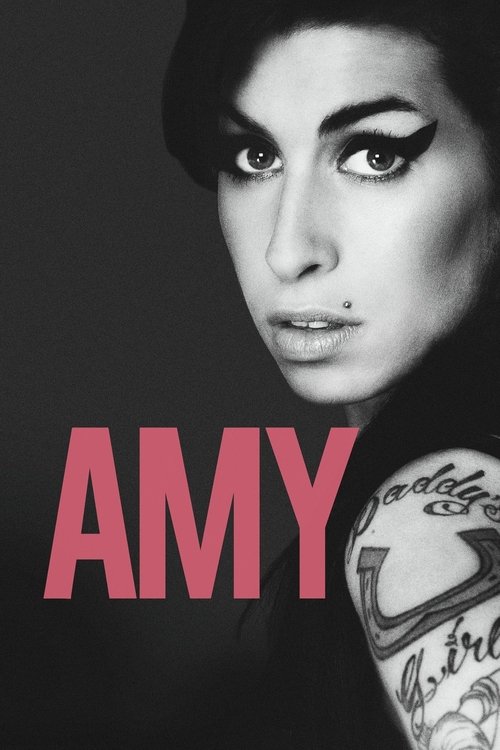
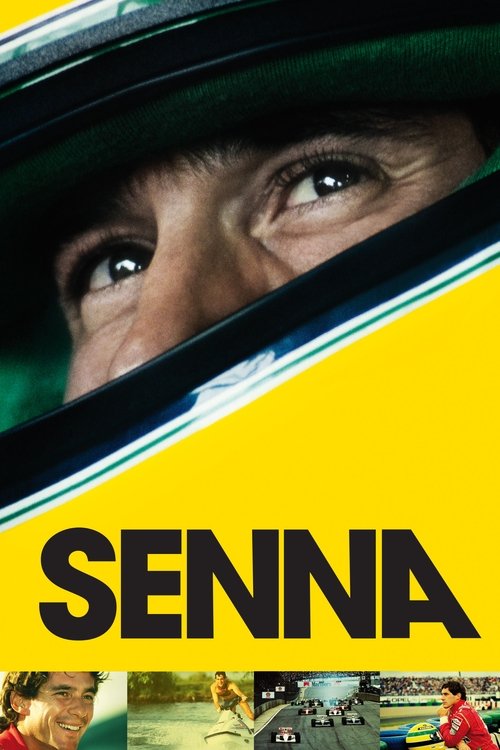
Asif Kapadia (born 1972) is a British filmmaker. Kapadia is best known for his trilogy of narratively driven, archive-constructed documentaries Senna, Amy, and Diego Maradona.
Contents
Early life and education
Asif Kapadia was born in 1972 in north London, to an Indian Muslim family.
He attended Newport Film School (formerly part of the University of Wales, Newport, now the University of South Wales), and achieved a first-class degree (BA Hons) in Film, TV, and Photographic Arts from the University of Westminster followed by an MA (RCA) in Directing for Film and TV at the Royal College of Art.
Kapadia has said he sees himself as a Londoner ("a Hackney lad"), northern European, with Indian family heritage. These unique characteristics helped to make him stand out as a filmmaker when he was starting out.
I've always tried to do things differently – because my point of view is different.
I don’t come from private school, I don’t come from money. My family were not in the film industry. I’m not white, I’m brown, and my background is Muslim. My family are from India and are quite religious. As the youngest of five kids, my parents kind of let me do what I wanted to do. I was able to have a point of view, I wasn’t told, ‘You must do this’: I picked what I wanted to study, I never did A-levels.
Career
Kapadia's first feature film, The Warrior, was shot in the Himalayas and the deserts of Rajasthan. The film caught the attention of The Arts Foundation, who in 2001 awarded him a fellowship in film directing. Peter Bradshaw in The Guardian described The Warrior as possessing "mighty breadth" and "shimmering beauty"; the film was nominated for three BAFTA awards, winning two: the Alexander Korda Award for the outstanding British Film of the Year 2003 and The Carl Foreman Award for Special Achievement by a Director, Screenwriter or Producer in their First Feature.
Far North premiered at the Venice Film Festival, based on a dark short story by Sara Maitland. Kapadia used the brutal arctic landscape to show how desperation and loneliness drives a woman to harm the person she loves.
Kapadia's fourth feature, Senna, was the life story of Brazilian motor-racing champion, Ayrton Senna. The film won the BAFTA Award for Best Documentary, the BAFTA Award for Best Editing, and the World Cinema Audience Award Documentary at the 2011 Sundance Film Festival. Senna was nominated for Outstanding British Film of the Year.
Kapadia's next film, Amy, was a documentary that depicted the life and death of British singer-songwriter Amy Winehouse. Amy was released on 3 July 2015 in the UK, New York, and Los Angeles, and worldwide on 10 July. The film has been described as "heartbreaking", "awe-inspiring", "unmissable", "the best documentary of the year" and "a tragic masterpiece". The film received five out of five star ratings when it was reviewed at the 2015 Cannes Film Festival in May. The film has become the highest grossing British documentary, and second highest grossing documentary of all time in the United Kingdom, overtaking Kapadia's 2010 movie Senna.
In 2018, a documentary film titled Maradona, based on Argentine football legend Diego Maradona, was released. Following on from Senna and Amy, Kapadia said "Maradona is the third part of a trilogy about child geniuses and fame".
In 2019, Kapadia was awarded as Honorary Associate of London Film School.
In May 2021, he released the musical docuseries 1971: The Year That Music Changed Everything, based on the book 1971 – Never a Dull Moment: Rock's Golden Year, by the British music journalist David Hepworth.
Personal life
Kapadia met and worked with art director Victoria Harwood on his 1997 film, The Sheep Thief. They married in 2006.
In the early 2000s, Kapadia was subjected to xenophobic practices after a taxi driver reported him to government officials for taking photos of New York City during a trip. As a result, Kapadia was placed on a US Government watch list that required him to undergo extra screening while travelling. In response to the incident, Universal Studios provided Kapadia with a letter verifying his occupation, intended for presentation to government authorities. Kapadia subsequently avoided unnecessary travel to the US for several years.
In September 2019, Kapadia appeared on BBC Radio 4's The Film Programme in which he told presenter Francine Stock of his love for the Vietnamese gangster movie Cyclo by writer-director Trần Anh Hùng. He saw it when it first came out in 1996, when he was a film student, and it crystallised his ambitions for the type of film-making he wished to pursue. As he explained to Stock, "a lightbulb went off in my head" and his life was never the same again.
Favourite films
In 2022, Kapadia participated in the Sight & Sound film polls of that year. It is held every ten years to select the greatest films of all time, by asking contemporary directors to select ten films of their choice.
Kapadia's selections were:
Political views
In December 2019, along with 42 other leading cultural figures, Kapadia signed a letter endorsing the Labour Party under Jeremy Corbyn's leadership in the 2019 general election.
Support for Palestinian causes
In 2015, Kapadia signed an open letter in solidarity with the people of Palestine, pledging to boycott professional invitations to Israel and to refuse funding from any institutions linked to its government. In the letter, the boycott drew comparisons to the Artists United Against Apartheid movement, a 1985 collective of artists who protested South African apartheid.
In October 2024, Kapadia shared posts on the social media platform X supporting the Palestinian and Lebanese peoples in reference to the Gaza War. The Grierson Trust deemed some of the posts to be antisemitic, and subsequently removed Kapadia as a patron. Kapadia issued an apology, telling BBC News he was "mortified by the hurt and offence" that some of his posts have caused. Kapadia would go on to state that he is "equally passionate about all anti-racism". The Grierson Trust’s treatment of Kapadia led senior Muslim officials in the British television industry to boycott the 2024 Grierson Awards.
In September 2025, Kapadia signed an open pledge with Film Workers for Palestine pledging not to work with Israeli film institutions "that are implicated in genocide and apartheid against the Palestinian people".