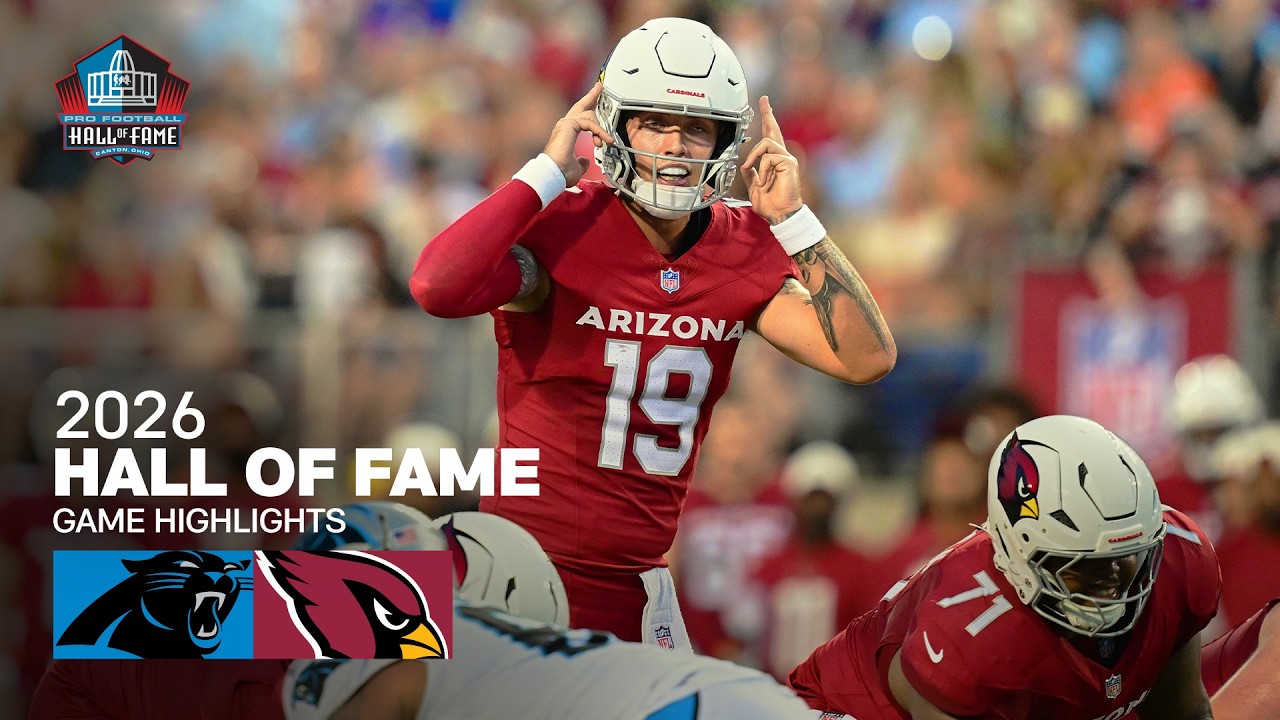



The Arizona Cardinals are a professional American football team based in the Phoenix metropolitan area. The Cardinals compete in the National Football League (NFL) as a member of the National Football Conference (NFC) West division. The team plays its home games at State Farm Stadium in Glendale, a suburb northwest of the state capital of Phoenix.
The team was established in Chicago in 1898 as the Morgan Athletic Club, and joined the NFL as a charter member on September 17, 1920. The Cardinals are the oldest continuously run professional football franchise in the United States, and, along with the Chicago Bears, are the only NFL charter member franchises still in operation.
In 1960, the team moved to St. Louis, where it was commonly referred to as the "Football Cardinals", the "Gridbirds", or the "Big Red" to avoid confusion with Major League Baseball's (MLB) St. Louis Cardinals.
Before the 1988 season, the team moved to Tempe, Arizona, a suburb of Phoenix, where it played home games for the next 18 seasons at Sun Devil Stadium on the campus of Arizona State University. In 2006, the team moved to their current home field in suburban Glendale. Their executive offices and training facility remain in Tempe, although they are moving them to north Phoenix in 2028. From 1988 to 2012 (except 2005, when they trained in Prescott), the Cardinals conducted their annual summer training camp at Northern Arizona University in Flagstaff. In 2013, the Cardinals moved their training camp to their home field, then called University of Phoenix Stadium, now State Farm Stadium.
The Cardinals have won two NFL championships, both while the team was in Chicago. The first, in 1925, was disputed by supporters of the Pottsville Maroons. Their second, and the first to be won in a championship game, came in 1947, nearly two decades before the first Super Bowl. They returned to the title game to defend in 1948, but lost the rematch 7–0 in a snowstorm in Philadelphia.
The team has since suffered many losing seasons and, as of 2025, has the longest active championship drought in North American sports at 78 seasons. The next longest drought is MLB's Cleveland Guardians, who last won the World Series in 1948; 1 year after the Cardinals won their last championship.
The team's all-time win–loss record (including regular season and playoff games) at the conclusion of the 2025 season was 603–836–41 (596–826–41 in the regular season, 7–10 in the playoffs). They have been to the playoffs 11 times and have won seven playoff games, including three in the 2008–09 NFL playoffs. During that season, they won their only NFC Championship Game since the 1970 AFL–NFL merger, and reached Super Bowl XLIII, losing 27–23 to the Pittsburgh Steelers.
The team has won five division titles (1974, 1975, 2008, 2009, and 2015) since their 1947–48 NFL championship game appearances. The Cardinals are the only NFL team that has never lost a playoff game at home: their 5–0 record encompasses the 1947 NFL Championship Game, two games during the 2008–09 NFL playoffs, one during the 2009–10 playoffs, and one during the 2015–16 playoffs.
In their 37 seasons since moving to Arizona in 1988, the Cardinals have a total of six playoff appearances, three division titles, and one NFC championship.
Contents
History
Chicago Cardinals (1920–1959)
The franchise dates to 1898, when a neighborhood group gathered to play on the South Side of Chicago, calling themselves the Morgan Athletic Club. Chicago painting and building contractor Chris O'Brien acquired the team, which he moved to Normal Field on Racine Avenue. The team was known as the Racine Normals until 1901, when O'Brien bought used jerseys from the University of Chicago. After he described the faded maroon clothing as "Cardinal red", the team became the Racine Street Cardinals. Eventually in 1920, the team became a charter member of the American Professional Football Association (APFA), which was rechristened the National Football League (NFL) two years later. The team entered the league as the Racine Cardinals, but changed their name to the Chicago Cardinals in 1922 to avoid confusion with the Horlick-Racine Legion, who entered the league the same year.
In 1925, the Cardinals were awarded the NFL Championship after the Pottsville Maroons were suspended for playing a game in what was deemed "another team's territory". Having beat the Cardinals in a head-to-head game earlier in the season, the Pottsville Maroons won their extra game against the University of Notre Dame, helping them finish the year with the same record as the Cardinals. The Cardinals were also guilty of breaking NFL rules by scheduling two additional games against the Hammond Pros and the Milwaukee Badgers, both of whom had already disbanded for the season. The game against the Badgers spurred a scandal when the Badgers filled out their roster with four high school players, in violation of NFL rules.
During the post-World War II years, the team reached two straight NFL finals against the Philadelphia Eagles, winning in 1947 (eight months after Charles Bidwill's death) but losing the following year. In the late 1950s, after years of bad seasons and losing fans to their crosstown rivals, the Chicago Bears, the Cardinals were almost bankrupt, and owner Violet Bidwill Wolfner became interested in moving the team to a new city.
St. Louis Cardinals (1960–1987)
Due to the formation of the rival American Football League, the NFL allowed Bidwill to move the team to St. Louis, Missouri, where they became the St. Louis Cardinals. They were locally called the "Big Red", the "Gridbirds" or the "Football Cardinals" to avoid confusion with the local baseball team of the same name. During the Cardinals' 28-year stay in St. Louis, they advanced to the playoffs just three times (1974, 1975 and 1982), never hosting or winning. They did, however, win the Playoff Bowl, a now-defunct post-season game for third place, in 1964 against the Green Bay Packers by a score of 24–17. The overall mediocrity of the Cardinals, combined with a then-21-year-old stadium, caused game attendance to dwindle, and owner Bill Bidwill decided to move the team to Arizona.
Phoenix/Arizona Cardinals (1988–present)
Not long after the end of the 1987 NFL season, Bidwill agreed to move to Phoenix on a handshake deal with state and local officials, and the team became the Phoenix Cardinals. The team changed their name to the Arizona Cardinals on March 17, 1994.
The Cardinals hired Vince Tobin as head coach before the 1996 season. In his first season, he led the team to a 7–9 mark in the 1996 season. The team regressed in the 1997 season with a 4–12 record. The 1998 NFL season saw the Cardinals break two long droughts, qualifying for the playoffs for the first time in 16 years. The team got their first postseason win since 1947 by defeating the Dallas Cowboys 20–7 in the wild card round of the playoffs. The Cardinals saw their run end in the Divisional Round with a 41–21 loss to the Minnesota Vikings. The Cardinals regressed to a 6–10 record in the 1999 season. In the 2000 season, Tobin was fired after a 2–5 start. Dave McGinnis finished the season out with a 1–8 record.
Before the 2001 season, the Cardinals named McGinnis as their head coach. He coached for three seasons, regressing each year record-wise. He was fired by the team after the 2003 season.
Before the 2004 season, the Cardinals hired Dennis Green as head coach. He coached the team to three consecutive losing seasons and was fired after the 2006 season.
The Cardinals hired Ken Whisenhunt as head coach before the 2007 season. In his first season with the team, Whisenhunt led the Cardinals to an 8–8 record in the 2007 season. In the 2008 postseason, the Cardinals, led by quarterback Kurt Warner, won the Wild Card Round over the Atlanta Falcons, the Divisional Round against the Carolina Panthers, and the NFC Championship Game against the Philadelphia Eagles to advance to the Super Bowl for the first time in their history. They lost Super Bowl XLIII 27–23 to the Pittsburgh Steelers in the final seconds of the game.
After their historic 2008 season, the Cardinals posted a 10–6 record in 2009, their first season with 10 wins in Arizona. The Cardinals clinched their second consecutive NFC West title but were defeated by eventual Super Bowl champion New Orleans Saints, 45–14 in the divisional playoffs. After the 2012 season, the Cardinals fired Whisenhunt as head coach. Before the 2013 season, the team hired Bruce Arians as head coach. Arians' first season with the team saw the Cardinals go 10–6 but miss the postseason in 2013. The next time they would make the playoffs would be in 2014, as a wild card. They set the best regular season record in their history in Arizona at 11–5 but were defeated by the 7–8–1 NFC South champions, the Carolina Panthers.
Logos and uniforms
The team has worn cardinal red jerseys since Chris O'Brien bought them for the club in 1898. For most of their history, the Cardinals have used the same basic uniform design of white helmets, white pants with red stripes on the sides, and either red or white jerseys.
Starting in 1947, the team had a logo of a Northern cardinal (Cardinalis cardinalis) perched on the laces of a football.
The Cardinals moved to Arizona in 1988, and the flag of Arizona was added to the sleeves the following year. In 1990, the team began wearing red pants with their white jerseys, as new coach Joe Bugel wanted to emulate his former employer, the Washington Redskins, who at the time wore burgundy pants with their white jerseys (the Redskins later returned to their 1970s gold pants with all their jerseys).
In 1994, the Cardinals participated in the NFL's 75th-anniversary throwback uniform program. The jerseys were similar to those of the 1920s Chicago Cardinals, with an interlocking "CC" logo and three stripes on each sleeve. The uniform numbers were moved to the right chest. The pants were khaki to simulate the color and material used in that era. The Cardinals also stripped the logos from their helmets for two games: at Cleveland and home vs. Pittsburgh.
The Cardinal head on the helmet also appeared on the sleeve of the white jersey from 1982 to 1995. In 1996, the state flag of Arizona was moved higher on the sleeve after the Cardinal head was eliminated as sleeves on football jerseys became shorter, and black was removed as an accent color, instead replaced with blue to match the predominant color of the state flag. In 2002, the Cardinals began to wear all-red and all-white combinations, and continued to do so through 2004, before the team's makeover.
In 2005, the team unveiled its first major changes in a century. The cardinal-head logo was updated to look sleeker and meaner than its predecessor. Numerous fans had derisively called the previous version a "parakeet". Black again became an accent color after an eight-year absence, while trim lines were added to the outside shoulders, sleeves, and sides of the jerseys and pants. Both the red and white jerseys have the option of red or white pants.
Fans
The Cardinals' playoff drought has exhibited resilience for some fans who have shown longtime devotion to the team. Some fans view the championship drought and loss record as the result of a convoluted "curse" that stems from the team's refusal to cede or share the disputed 1925 NFL title. Fans of the Cardinals are often referred to as the Red Sea or the Bird Gang; notable fans include Blake Shelton and Jordin Sparks. In honor of the tragic death of former safety Pat Tillman, the Cardinals strengthened their relationship with members of the armed forces community. The team regularly markets to military personnel and frequently visits nearby Luke Air Force Base in support of Arizona's servicemen.
Rivalries
Divisional
Both the oldest and most intense divisional rivalry for the Cardinals, the matchup saw both teams first meet during the 1937 NFL season, while the Rams played in Cleveland, and the Cardinals were still originally located in Chicago. Both teams had played in St. Louis for a brief period in their histories, the Cardinals from 1960 to 1987 and the Rams from 1995 to 2015. Their rivalry with the Los Angeles Rams has resurged in recent years as both teams found playoff success, despite the Cardinals' best efforts; the Rams have been 15–3 since hiring head coach Sean McVay in 2017. The Week 17 matchup of the 2020 season saw both teams playing for a playoff berth; despite the injury to Rams quarterback Jared Goff, the Cardinals lost 18–7 and were eliminated from the postseason. The Cardinals' streak ended against the Rams the following season. They took the lead in the NFC over the Rams and started the season 7–0. In the following matchup, the Rams won on Monday Night Football; the Cardinals lost 6 of 10 games after their 7–0 start. The Cardinals would clinch a wild card berth after a week 17 win over the Dallas Cowboys. They played the Rams in Los Angeles and lost 34–11 as Kyler Murray threw 2 interceptions with one returned for a touchdown. The Rams lead the series 50–40–2 while leading the postseason series 2–0.
One of the newer rivalries in the NFL, the Cardinals and Seattle Seahawks became divisional rivals after both were moved to the NFC West as a result of the league's realignment in 2002. This rivalry has become one of the NFL's more bitter in recent years, as the mid-to-late 2010s often saw the Seahawks and Cardinals squaring off for NFC West supremacy. The rivalry featured such clashes between the likes of Carson Palmer or Kyler Murray for the Cardinals against Pete Carroll and Russell Wilson for the Seahawks during the era. Seattle leads the series 25–22–1, and the two teams have yet to meet in the playoffs.
Though they first met in 1951 and would meet occasionally until 2000, this would not become a full-fledged rivalry until both teams were placed in the NFC West division in 2002. While a close rivalry, it is often lopsided on both ends. After the 49ers won nine of ten meetings between 2009 and 2013, the Cardinals won eight straight meetings between 2014 and 2018. The 49ers lead the series 34–29.
The two teams have yet to meet in the playoffs.
Historic
The historic rivalry between the Cardinals and the Chicago Bears features the only two teams that remain from the league's inception in 1920. At that time, the Bears were known as the Decatur Staleys, and the Cardinals were the Racine Cardinals. In 1922, the matchup between the teams became known as "The Battle of Chicago" for 38 years, making it the first true rivalry in the league's history. The Bears lead the all-time series 59–29–6.
Whilst the Cardinals were located in St. Louis from 1960 to 1987; the team took part in an instate rivalry with the Kansas City Chiefs, with a trophy being awarded to the winner of the matchup. The series ended after the Cardinals' move to Arizona in 1988. The Chiefs posted a 16–7–2 mark in its Governor's Cup series against the Cardinals from 1968 to 1987, going 3–1–1 in the regular season record and 13–6–1 in preseason play.
Seasons and overall records
Single-season records
Points scored: 489 (2015)
Passing
Passing yards: 4,671 – Carson Palmer (2015)
Passing touchdowns: 35 – Carson Palmer (2015)
Passes completed: 401 – Kurt Warner (2008)
Passes attempted: 598 – Kurt Warner (2008)
Longest completed pass: 98 yards – Doug Russell (1932); Ogden Compton (1957); Jim Hart (1972)
Rushing
Rushing yards: 1,605 – Ottis Anderson (1979)
Rushing attempts: 337 – Edgerrin James (2006)
Rushing touchdowns: 16 – David Johnson (2016)
Rushing touchdowns (rookie): 10 – Tim Hightower (2008)
Longest rushing attempt: 83 yards – John David Crow (1958)
Rushing yards per game: 100.3 yards – Ottis Anderson (1979)
Receiving
Receptions: 109 – Larry Fitzgerald (2015)
Receiving yards: 1,598 – David Boston (2001)
Receiving touchdowns: 15 – Sonny Randle (1960)
Returns
Punt returns in a season: 44 – Vai Sikahema (1987)
Career records
Passing yards: 34,639, Jim Hart (1966–1983)
Passing touchdowns: 209, Jim Hart (1966–1983)
Rushing yards: 7,999, Ottis Anderson (1979–1986)
Rushing touchdowns: 46, Ottis Anderson (1979–1986)
Receptions: 1,432, Larry Fitzgerald (2004–2020)
Receiving yards: 15,545, Larry Fitzgerald (2004–2020)
Passes intercepted: 52, Larry Wilson (1960–1972)
Field goals made: 282, Jim Bakken (1962–1978)
Points: 1,380, Jim Bakken (1962–1978)
Total touchdowns: 110, Larry Fitzgerald (2004–2020)
Punt return average: 13.7, Charley Trippi (1947–1955)
Kickoff return average: 28.5, Ollie Matson (1952, 1954–1958)
Yards per punt average: 44.9, Jerry Norton (1959–1961)
Sacks: 71.5, Chandler Jones (2016–2021)
Tackles: 785, Eric Hill (1989–1997)
Players of note
Retired numbers
Notes:
Although retired, #99 was re-issued to J. J. Watt after the daughter of Marshall Goldberg gave her blessing for Watt to wear it on March 2, 2021. Watt wore #99 for the 2021 and 2022 seasons until his retirement.
Pro Football Hall of Famers
Italics = played a portion of career with the Cardinals and enshrined representing another team
Dierdorf, Smith, Wehrli and Wilson were members of the St. Louis Football Ring of Fame in The Dome at America's Center when the Rams played there from 1995 to 2015.
Ring of Honor
The Cardinals' Ring of Honor was started in 2006 to mark the opening of State Farm Stadium. It honors former Cardinal greats from all eras of the franchise's history. Following is a list of inductees and the dates that they were inducted.
Staff
The Cardinals have had 42 head coaches throughout their history. Their first head coach was Paddy Driscoll, who compiled a 17–8–4 record with the team from 1920 to 1922. Jimmy Conzelman, Jim Hanifan and Ken Whisenhunt are tied as the longest-serving head coaches in Cardinals history. On April 14, 2022, Mark Ahlemeier, the Cardinals equipment manager, retired after working with the organization for 41 seasons. Their most recent head coach was Mike LaFleur
Radio and television
The Cardinals' flagship radio station is KMVP-FM; Dave Pasch, A. Q. Shipley, and Paul Calvisi handle the radio broadcast. Spanish-language radio broadcasts are heard on the combo of KQMR/KHOV-FM "Latino Mix" under a contract with Univisión, signed in 2015. Before 2015, they were heard on KDVA/KVVA-FM "José FM", as well as co-owned KBMB AM 710. The Cardinals were the first NFL team to offer all 20 preseason and regular season games on Spanish-language radio, doing so in 2000. Luis Hernandez and Rolando Cantú are the Spanish broadcast team. The Cardinals have the most extensive Mexican affiliate network in the NFL, with contracts with Grupo Larsa (in the state of Sonora) and Grupo Radiorama (outside Sonora) and stations in 20 cities, including Hermosillo, Guadalajara and Mexico City.
From 2017 to 2023, NBC affiliate KPNX broadcasts the team's preseason games on television (which, that year, included the Hall of Fame Game broadcast by NBC), called by Pasch and Wolfley, with station anchor Paul Gerke as sideline reporter. The broadcasts were syndicated regionally to KTTU and KMSB-TV in Tucson, and, until the Raiders' move to Las Vegas, KVVU-TV in Las Vegas.
In 2024, KTVK and KPHO purchased preseason broadcast rights to the Cardinals. This will be in addition to any Cardinals games already scheduled for KPHO.
Former affiliates
KTAR-FM/92.3: Glendale
KESZ/99.9: Phoenix
KGLQ/96.9: Phoenix
KIDR/740: Phoenix
KCAZ/99.5: Rough Rock
KSLX-FM/100.7: Scottsdale
KTAN/1420: Sierra Vista
KRVZ/1400: Springerville
KDUS/1060: Tempe
KUCB/1290: Tucson
KWRK/96.1: Window Rock
WCFL/1000: Chicago
WGN/720: Chicago
WIND/560: Chicago
KMOX/1120: St. Louis
KDEF/1150: Albuquerque
KEBC/1560: Del City
KYAL-FM/97.1: Muskogee