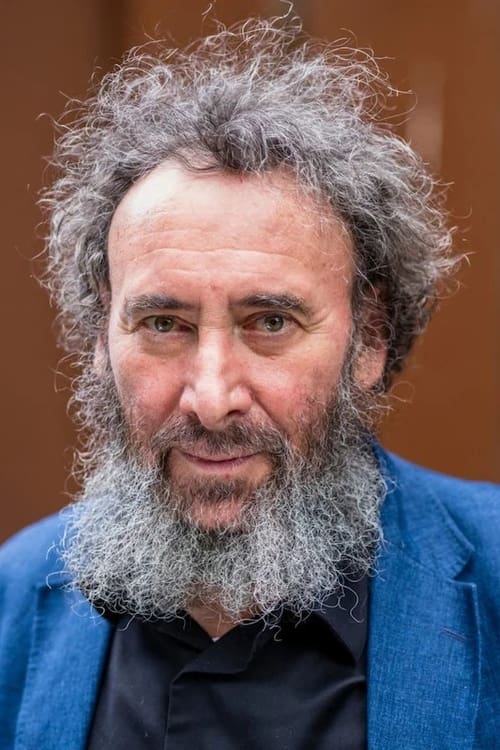
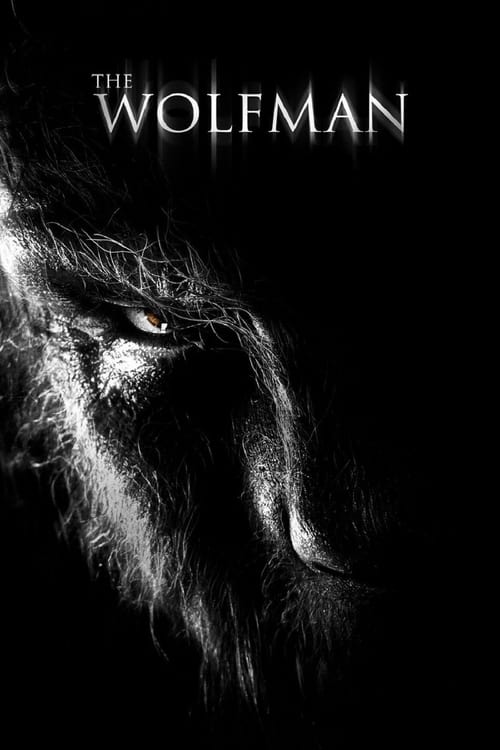
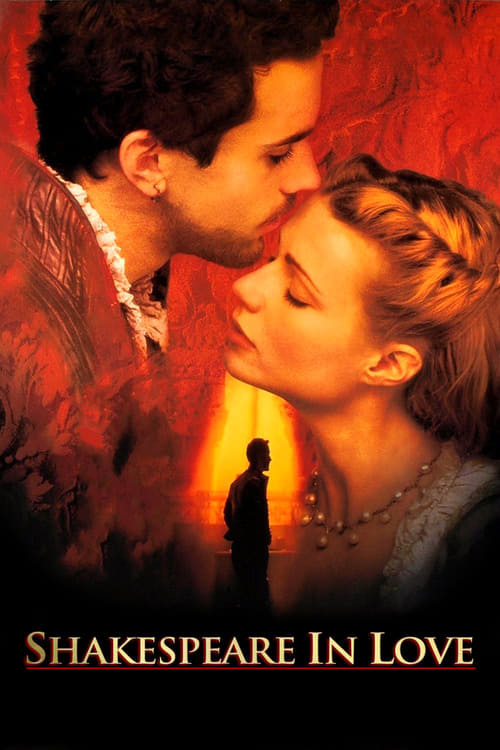
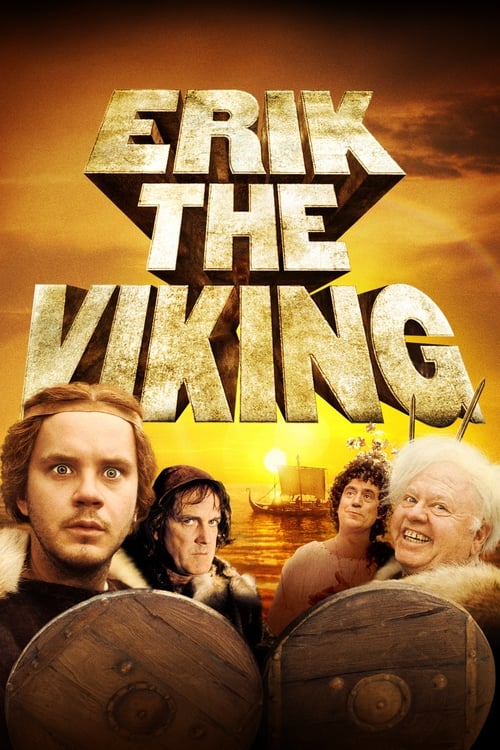
Sir Antony Sher (14 June 1949 – 2 December 2021) was a British actor, writer and theatre director of South African origin. A two-time Laurence Olivier Award winner and a five-time nominee, he joined the Royal Shakespeare Company in 1982 and toured in many roles, as well as appearing on film and television. In 2001, he starred in his cousin Ronald Harwood's play Mahler's Conversion and said that the story of a composer sacrificing his faith for his career echoed his own identity struggles.
During his 2017 "Commonwealth Tour", Prince Charles referred to Sher as his favourite actor.
Contents
Early life and education
Sher was born on 14 June 1949 in Cape Town, South Africa, the son of Margery (Abramowitz) and Emmanuel Sher, who worked in business. He was a first cousin once removed of the playwright Sir Ronald Harwood.
He grew up in the suburb of Sea Point, where he attended Sea Point High School.
Sher moved to the United Kingdom in 1968 and auditioned at the Central School of Speech and Drama and the Royal Academy of Dramatic Art (RADA), but was unsuccessful. He instead studied at the Webber Douglas Academy of Dramatic Art from 1969 to 1971 and subsequently on the one-year postgraduate course run jointly by Manchester University Drama Department and the Manchester School of Theatre.
Sher became a British citizen in 1979.
Career
In the 1970s, Sher was part of a group of young actors and writers working at the Liverpool Everyman Theatre. Comprising figures such as writers Alan Bleasdale and Willy Russell and fellow actors Trevor Eve, Bernard Hill, Jonathan Pryce, and Julie Walters, Sher summed up the work of the company with the phrase "anarchy ruled". He also performed with the theatre group Gay Sweatshop, before joining the Royal Shakespeare Company (RSC) in 1982.
While a member of the RSC, Sher was cast in the title role in Molière's Tartuffe, and played the Fool in King Lear. His major break came in 1984, when he performed the title role in Richard III and won the Laurence Olivier Award. Also for the RSC, Sher performed the lead in such productions as Tamburlaine, Cyrano de Bergerac, Stanley, and Macbeth, and in 2014 played Falstaff in Henry IV Part 1 and Henry IV Part 2 in Stratford-upon-Avon and on national tour. He played the eponymous 'King Lear' from 2016 to 2018. He also played Johnnie in Athol Fugard's Hello and Goodbye, Iago in Othello, Malvolio in Twelfth Night, and Shylock in The Merchant of Venice. Sher received his second Laurence Olivier Award in 1997 for his performance as Stanley Spencer in Stanley.
In 2001, Sher played the role of the composer Gustav Mahler in Ronald Harwood's play Mahler's Conversion, about Mahler's decision to renounce his Jewish faith prior to his appointment as conductor and artistic director of the Vienna State Opera House in 1897. Speaking about the role to The Guardian's Rupert Smith, Sher revealed: When I came to England in 1968, at 19, I looked around me and I didn't see any Jewish leading men in the classical theatre, so I thought it best to conceal my Jewishness. Also, I quickly became conscious of apartheid when I arrived here, and I didn't want to be known as a white South African. I was brought up in a very apolitical family. We were happy to enjoy the benefits of apartheid without questioning the system behind it. Reading about apartheid when I came to England was a terrible shock. So I lost the accent almost immediately, and if anyone asked me where I was from I would lie. If they asked where I went to school, I'd say Hampstead, which got me into all sorts of trouble because of course everyone else went to school in Hampstead and they wanted to know which one. Then there was my sexuality. The theatre was full of gay people, but none of them were out, and there was that ugly story about Gielgud being arrested for cottaging, so I thought I'd better hide that as well. Each of these things went into the closet until my entire identity was in the closet. That's why this play appealed to me so much: it's about an artist changing his identity in order to get what he wants.
Other work
Sher's books included the memoirs Year of the King (1985), Woza Shakespeare: Titus Andronicus in South Africa (with Gregory Doran, 1997), Beside Myself (an autobiography, 2002), Primo Time (2005), and Year of the Fat Knight (2015), a book of paintings and drawings, Characters (1990), and the novels Middlepost (1989), Cheap Lives (1995), The Indoor Boy (1996). and The Feast (1999). His 2018 book Year of the Mad King won the 2019 Theatre Book Prize, awarded by the Society for Theatre Research.
Sher also wrote several plays, including I.D. (2003) and Primo (2004). The latter was adapted as a film in 2005. In 2008, The Giant, the first of his plays in which Sher did not feature, was performed at the Hampstead Theatre. The main characters are Michelangelo (at the time of his creation of David), Leonardo da Vinci, and Vito, their mutual apprentice.
In 2005, Sher directed Breakfast With Mugabe at the Swan Theatre, Stratford-upon-Avon. The production moved to the Soho Theatre in April 2006 and the Duchess Theatre one month later. In 2007, he made a crime documentary for Channel 4, titled Murder Most Foul, about his native South Africa. It examines the double murder of actor Brett Goldin and fashion designer Richard Bloom. In 2011, Sher appeared in the BBC TV series The Shadow Line in the role of Glickman.
Personal life, illness and death
In 2005, Sher and the director Gregory Doran, with whom he frequently collaborated professionally, entered into a civil partnership in the UK. They married on 30 December 2015, a little over ten years after the registration of their civil partnership.
On 10 September 2021, it was announced that Sher was terminally ill and Doran took compassionate leave from the RSC to care for him. Sher died from cancer at his home in Stratford-upon-Avon on 2 December 2021, aged 72.
Stage performances
Theatre
1972–74: Multiple roles at the Everyman Theatre, Liverpool.
1974: Ringo Starr in Willy Russell's John, Paul, George, Ringo ... and Bert at the Everyman Theatre, Liverpool, where it opened in May 1974. Transferred to the Lyric Theatre, London, in August.
1975: Teeth 'n' Smiles by David Hare at the Royal Court Theatre, where it opened in September 1975, subsequently transferring to Wyndham's Theatre in May 1976.
1979: American Days by Stephen Poliakoff at the ICA, London.
1982: Mike Leigh's Goosepimples in the West End.
1982: The Fool in King Lear at the Royal Shakespeare Theatre. Transferred to the Barbican Centre in 1983.
1984: Richard III with the Royal Shakespeare Company (RSC). Transferred to the Barbican Centre in 1985.
1985: Torch Song Trilogy at the Albery Theatre, West End.
1985: Red Noses at the Barbican Theatre, London.
1987: Shylock in The Merchant of Venice with the RSC.
1987: Henry Irving in Happy Birthday, Sir Larry at the Royal National Theatre, London (Laurence Olivier 80th birthday tribute).
1988: Vendice in The Revenger's Tragedy with the RSC.
1990: Peter Flannery's Singer with the RSC, Barbican Theatre.
1991: Kafka's The Trial and Brecht's The Resistible Rise of Arturo Ui at the Royal National Theatre.
Filmography
Awards and nominations
BAFTA TV Awards
1 nomination
Laurence Olivier Awards
2 wins, 5 nominations
Drama Desk Awards
1 win and 1 nomination
Evening Standard Theatre Awards
1 win and 1 nomination
Evening Standard British Film Awards
1 win and 1 nomination
Screen Actors Guild Awards
1 win and 1 nomination
Theatre Awards UK (TMA)
1 win and 1 nomination
Tony Awards
1 nomination
Honours
1998: Honorary Doctor of Letters (Hon. Litt.D.) from the University of Liverpool
2000: Knight Commander of the Most Excellent Order of the British Empire (KBE) for services to theatre
2007: Honorary Doctor of Letters (Hon. Litt.D.) from the University of Warwick
2010: Honorary Doctor of Letters (Hon. Litt.D.) from the University of Cape Town