Style and themes
Amirpour's films are known for being highly stylized and her creative choices often revolve around the mixing and meshing of cultural backgrounds and genres. She emphasizes worldbuilding, and the setting plays a vital role in her films. In an interview with Matt Mullen from Interview Magazine, she explains, "I think locations are as important as a character in a story—the whole personality of the place. I'm into creating an immersive, transportive experience. And there are so many interesting places on Earth already."
Music and score are important to her work. Her two released films feature eclectic soundtracks that play a major role in establishing character feelings and settings. "I love music and whenever I start thinking of a story or characters, music always pops up. It's just as much an outfit as you'd think they would wear. The music they listen to will tell you more about their character." These qualities feature significantly in A Girl Walks Home Alone at Night, a film that is widely regarded as the "first Iranian vampire western."
Inspiration from the Eastern and Western worlds are equally present in all her work, mainly influenced by Amirpour's experience as a first-generation Iranian-American. Themes of outcasts, rebels, and "otherness" are a staple to her filmography to date, which she attributes to her personal history of feeling out of place. "I'm a brown woman immigrant, my family escaped the Iranian Revolution, I grew up on two continents, and English wasn't the first language in my home. I know what it is to be the 'other' very well." These themes usually revolve around central female characters who are outcasts in their own worlds and must find a way to break free from the molds they've been confined to by society. Yet when confronted with the question of feminism, she explains that her debut film "can be feminist if that's what people think," while still prompting her critics and audience to consider her individuality as an artist separate from her womanhood. Amirpour quips, "I wonder if when Tarantino made Kill Bill, did people say he was a feminist? It's weird. I wonder if like, 'Oh a female and so she's battling misogyny.'" However, women are not the only source of outcasts in her films. In a Q&A with Roger Corman about A Girl Walks Home Alone at Night, Amirpour explained that "all the characters in the story are isolated and grappling with something that keeps them away from other people and themselves and from knowing what they want and from figuring out how to get it." She has noted that she finds her characters from a secret place within herself: "I like outcasts, I'm always drawn to the people that don't neatly fit into the conventional shit that's all around, the system. But, for what I'm writing right now, once again, it's all about this shit that I'm trying to figure out."
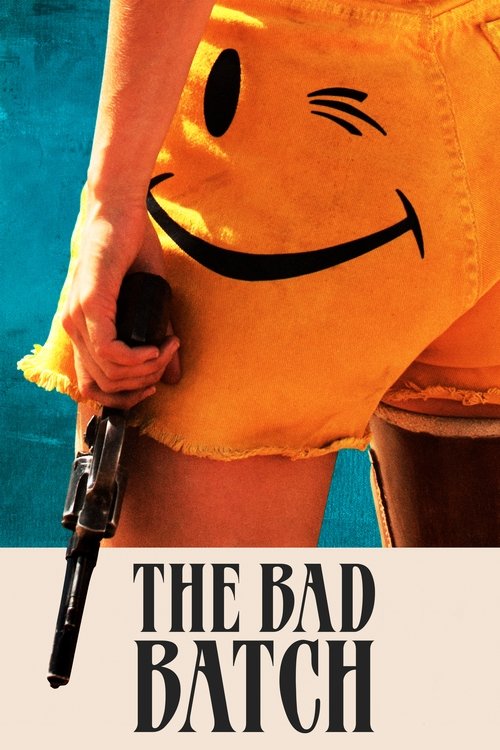
Another signature characteristic of Amirpour's film-making is her embrace of the political. Although she approaches any feminist reading of A Girl Walks Home Alone At Night with a level of reserve, Amirpour hopes her audience will appreciate the film's representation of a drag-wearing, silent character named Rockabilly who she describes as gay and Bitch Media calls genderqueer. Amirpour says, "If there's one political thing [in the movie], it's not the chador; it's Rockabilly because it's not OK to be gay in Iran." With Bad Batch, Amirpour claimed a popular political interpretation of her work that moves beyond her original intention. She created the film in 2015 with the vision of depicting society's outcasts and later donned the anti-Trump message ascribed to it. The film was also meant to critique modern capitalism and consumerist ideology, as motifs of overindulgence and consumption took center stage, themes that were also present in her first feature.
Amirpour's films often value images and framing over dialogue. When questioned about the sparse dialogue in her films, she said, "For me, it's interesting that people take the lack of dialogue as there is no story. It makes people uncomfortable, which I understand." Her prioritization of visuals has garnered acclaim: A Girl Walks Home Alone At Night received two nominations for Best Cinematography at the Chlotrudis Awards and Independent Spirit Awards, and won the Dublin Film Critics Award for the same category.
Various film directors have had an impact on Amirpour's style: David Lynch, Francis Ford Coppola, Robert Zemeckis, and Sergio Leone. In an interview with IU Cinema, she expressed that she finds inspiration from film-makers, writers, photographers and music. Anne Rice was the major influence for A Girl Walks Home Alone At Night, and Bruce Lee remains one of her biggest artistic heroes (his book Striking Thoughts is one she continually returns to for inspiration). Films that she has found inspiring throughout her life and career include The NeverEnding Story, Back to the Future, Sin City, and Pulp Fiction.