Overview
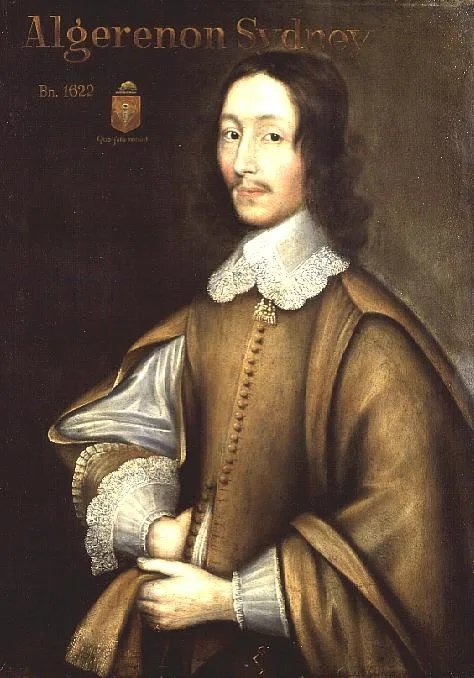
Algernon Sidney or Sydney (15 January 1623 – 7 December 1683) was an English politician, republican political theorist and colonel. A member of the middle part of the Long Parliament and commissioner of the trial of King Charles I of England, he opposed the king's execution. Sidney was later charged with plotting against Charles II, in part based on his most famous work, Discourses Concerning Government, which was used by the prosecution as a witness at his trial. He was executed for treason. After his death, Sidney was revered as a "Whig patriot—hero and martyr".
The works of Algernon Sidney, along with those of contemporary John Locke, are considered a cornerstone of western thought. Discourses Concerning Government cost Sidney his life. However, the ideas it put forth survived and ultimately culminated in the Glorious Revolution in England and the founding of the United States. Sidney directly opposed the theory of divine right of kings by suggesting ideas such as limited government, voluntary consent of the people and the right of citizens to alter or abolish a corrupt government. Discourses Concerning Government has been called "the textbook of the American revolution."
Early life
Sidney's father was Robert Sidney, 2nd Earl of Leicester, a direct descendant of John Dudley, 1st Duke of Northumberland and the great-nephew of Sir Philip Sidney. His mother was Dorothy Percy, daughter of Henry Percy, 9th Earl of Northumberland. Sidney was born at Baynard's Castle, London, and was raised at Penshurst Place in Kent. His mother wrote to her husband in November 1636 that she had heard their son "much comended by all that comes from you . . . [for] a huge deall of witt and much sweetness of nature".
English Civil War and Republic
Despite having earlier vowed that only "extreme necessity shall make me thinke of bearing arms in England", Sidney served in the Army of the Eastern Association, becoming lieutenant colonel of the Earl of Manchester's regiment of horse (cavalry). He fought at the Battle of Marston Moor in 1644, where an observer wrote: "Colonel Sidney charged with much gallantry in the head of my Lord Manchester's regiment of horses, and came off with many wounds, the true badges of his honour". He was later appointed colonel of the regiment when it was transferred to the New Model Army, but relinquished the appointment due to ill health.
From Wikipedia (CC BY-SA 4.0).