Akiva Goldsman (born July 7, 1962) is an American screenwriter, producer, and director. His filmography as a screenwriter includes The Client; Batman Forever and its sequel Batman & Robin; I, Robot; I Am Legend; Cinderella Man, and numerous rewrites that are both credited and uncredited. He also wrote more than a dozen episodes for the science fiction television series Fringe.
In 2002, Goldsman received the Oscar for Best Adapted Screenplay and the Golden Globe Award for Best Screenplay for the 2001 film A Beautiful Mind, which also won the Academy Award for Best Picture. In 2006, Goldsman re-teamed with A Beautiful Mind director Ron Howard to adapt Dan Brown's novel The Da Vinci Code for Howard's film. He also wrote the screenplay for its 2009 sequel Angels & Demons.
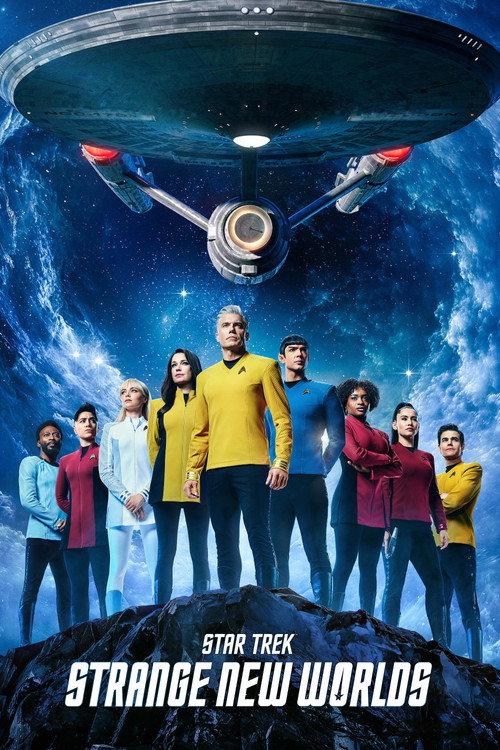
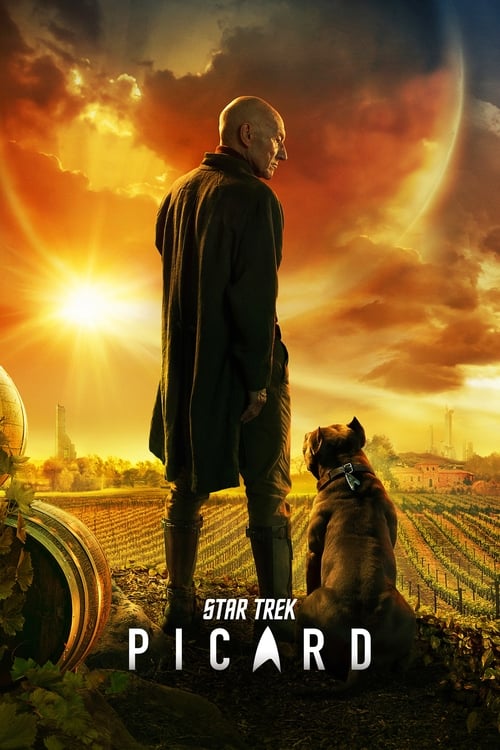
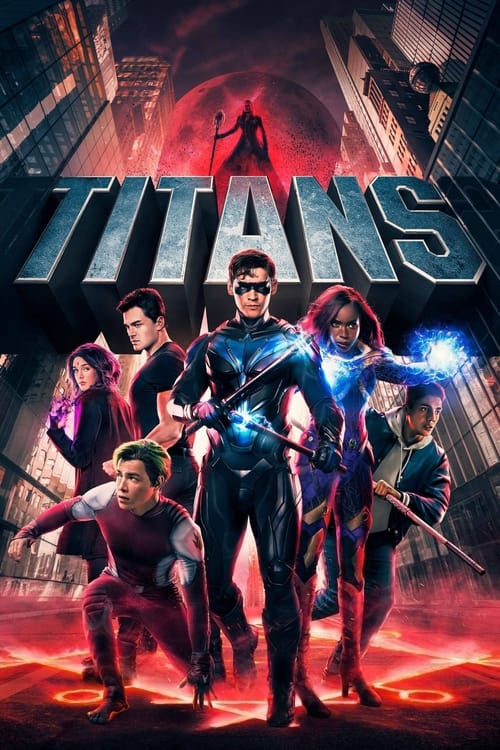
Goldsman is also known for co-developing the DC Comics TV series Titans and the Paramount+ series Star Trek: Picard, a sequel to Star Trek: The Next Generation and Star Trek: Nemesis. He is also the co-creator of Star Trek: Strange New Worlds, a prequel to Star Trek: The Original Series.
Contents
Early life
Goldsman was born in New York City to Jewish parents and raised in Brooklyn Heights. His parents, Tev Goldsman and Mira Rothenberg, were both clinical child psychologists who ran a group home for emotionally disturbed children. He graduated from Saint Ann's School, also in Brooklyn Heights, where he says he made many friends with whom he later worked in the entertainment industry. He received his bachelor's degree from Wesleyan University and attended the graduate fiction-writing program at New York University.
Career
1994–2000: Early career and breakthrough
Goldsman’s first major breakthrough in feature film screenwriting came in 1994 with The Client, a legal thriller directed by Joel Schumacher. The film, based on John Grisham's 1993 novel of the same name, starred Susan Sarandon and Tommy Lee Jones. The Client was a box-office success and received positive reviews from critics.
In 1995, Goldsman wrote the screenplay for Batman Forever, marking his second collaboration with Schumacher. The film was produced by Tim Burton and starred Val Kilmer, Tommy Lee Jones, Jim Carrey, Nicole Kidman, and Chris O'Donnell. Batman Forever was a commercial success, grossing over $330 million worldwide and becoming the sixth-highest-grossing film of 1995. The film received mixed reviews from critics, though its critical reception did not impact its strong box office performance and audience scores.
In 1996, Goldsman collaborated for a third time with director Schumacher on A Time to Kill, a legal drama based on John Grisham's 1989 novel of the same name. The film featured a cast that included Sandra Bullock, Samuel L. Jackson, Matthew McConaughey, and Kevin Spacey, with Donald and Kiefer Sutherland in supporting roles and Octavia Spencer making her film debut. A Time to Kill was a commercial success and received generally mixed to positive reviews from critics.
In 1997, Goldsman collaborated with Schumacher for a fourth time on the superhero film Batman & Robin. The film starred George Clooney, Chris O'Donnell, Arnold Schwarzenegger, Uma Thurman, and Alicia Silverstone. Unlike their previous collaborations, the film underperformed relative to expectations at the box office. While it roughly broke even, the film received overwhelmingly negative reviews from both critics and audiences and is widely regarded as one of the worst films ever made. Despite the film’s poor reception, Warner Bros. initially planned a sequel and offered Goldsman the opportunity to write it with Schumacher set to direct. However, Goldsman declined, and after failed attempts to develop the sequel with another writer, Warner Bros. ultimately canceled the project.
In 1998, Goldsman wrote the screenplay for the sci-fi action-adventure film Lost in Space, directed by Stephen Hopkins. Based on the Irwin Allen television series of the same name, the film starred William Hurt, Matt LeBlanc, Gary Oldman, and Heather Graham. While Lost in Space received mostly negative reviews from critics, it performed moderately well at the box office. It debuted at number one, ending the 15-week streak of James Cameron's Titanic at the top of the box office.
2000–2010: Oscar win
In 2001, Goldsman wrote the screenplay for A Beautiful Mind, a biographical drama based on the life of mathematician John Nash, a Nobel Laureate in Economics known for his contributions to game theory. Directed by Ron Howard and starring Russell Crowe as Nash, the film depicts Nash’s time as a Princeton student and his struggles with schizophrenia. The film received eight nominations and won four, including Best Picture at the 74th Academy Awards. Goldsman received the Academy Award for Best Adapted Screenplay, marking his first Oscar nomination and win.
In 2008, Goldsman joined the first season crew of the Fox horror/mystery series Fringe as writer, director, and consulting producer. The first episode Goldsman directed and wrote was "Bad Dreams". In its fifth season, Goldsman remained a consulting producer.
2010–2020: Expansion into franchises and genre films
He produced the Universal Pictures feature Lone Survivor, from writer/director Peter Berg, based on the book Lone Survivor: The Eyewitness Account of Operation Redwing and the Lost Heroes of SEAL Team 10 by Marcus Luttrell. It tells the story of Luttrell's Navy SEAL team in 2005 Afghanistan, on a mission to kill a terrorist leader. It starred Mark Wahlberg, Emile Hirsch, Ben Foster and Taylor Kitsch, and was released in 2013.
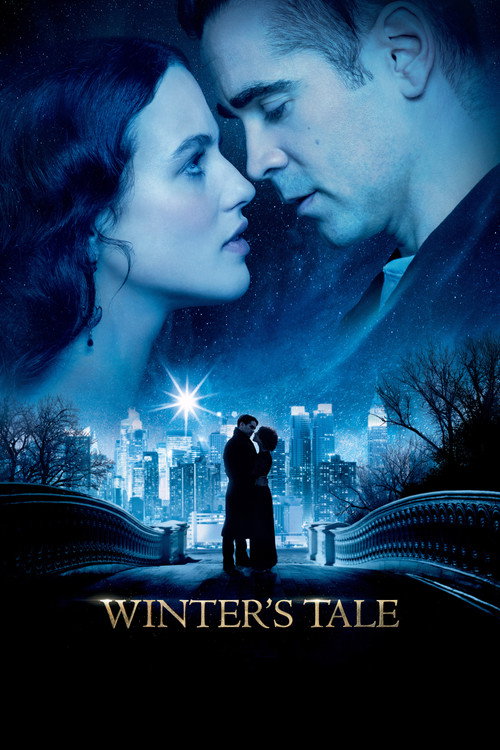
In 2014, Goldsman made his feature film directorial debut with Winter’s Tale, a film adaptation of Mark Helprin's novel. The film starred Colin Farrell, Russell Crowe, Jessica Brown Findlay, Jennifer Connelly, Will Smith, and William Hurt. Warner Bros. originally optioned the novel for Goldsman, but its complexity and his other projects delayed progress. Following the passing of his wife in 2010, Goldsman found renewed inspiration in the story, prompting him to resume writing and ultimately direct the film himself.
To bring the project to fruition, Goldsman sought support from industry connections and contributed personal funds to the production. With Warner Bros. cutting the budget in half, he adjusted the screenplay by streamlining the novel’s fantasy elements and love story. Despite production challenges, including setbacks from Hurricane Sandy and the bankruptcy of the film’s visual effects company, Goldsman completed the project. He described Winter’s Tale as an exploration of finding meaning, hope, and connection in life’s hardships, themes he hoped would resonate with audiences. The film was released on February 14, 2014.
In 2017, Goldsman also directed the horror thriller film Stephanie (2017) with Frank Grillo in the leading role.
In 2015, Paramount Pictures announced that Goldsman would head a team of writers and filmmakers to create a multifilm cinematic universe branching out from Hasbro's Transformers franchise.
He co-wrote and produced the film adaptation of Stephen King's The Dark Tower series, released on August 4, 2017, which was one of Goldsman's post-Apotheosis films.
2020–present: Recent work
In February 2025, it was announced that Goldsman was developing a new television universe at Legendary Television, featuring three reimagined sci-fi series originally created by Irwin Allen. The project is expected to include updated versions of Voyage to the Bottom of the Sea, Land of the Giants, and The Time Tunnel, drawing inspiration from Allen’s original works.
Personal life
Goldsman's first wife, film producer Rebecca Spikings-Goldsman, died of a heart attack on July 6, 2010, at the age of 42. Rebecca was the daughter of producer Barry Spikings.
In 2012, Akiva met his second wife, Joann Richter. Married in 2014, they have two daughters. The family divides their time between Los Angeles and New York.