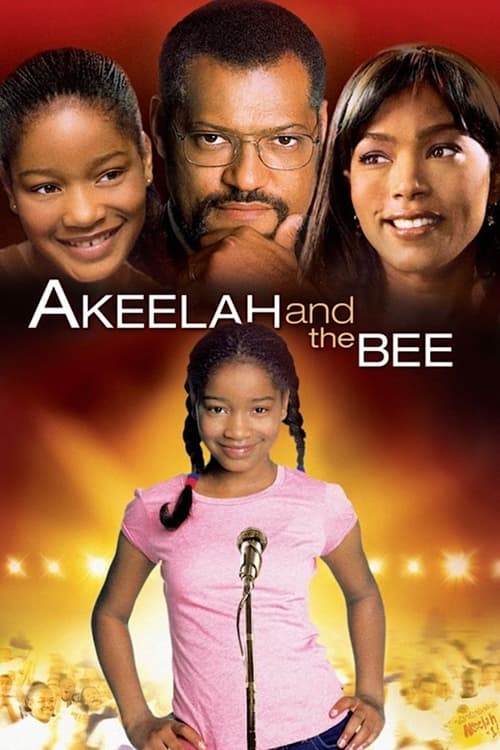




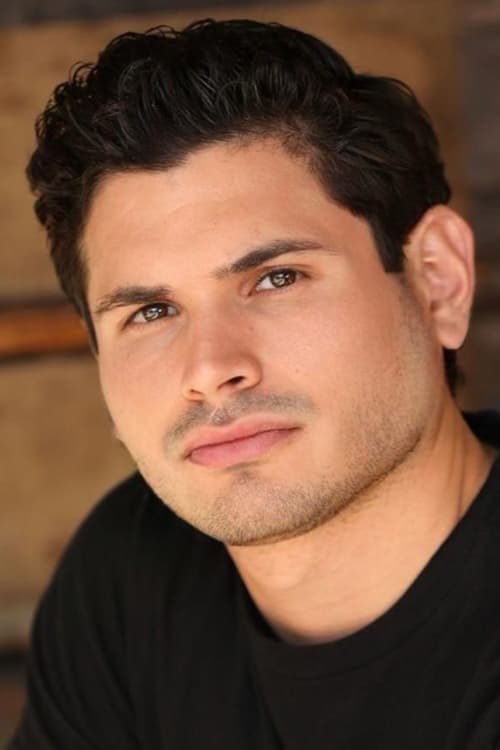
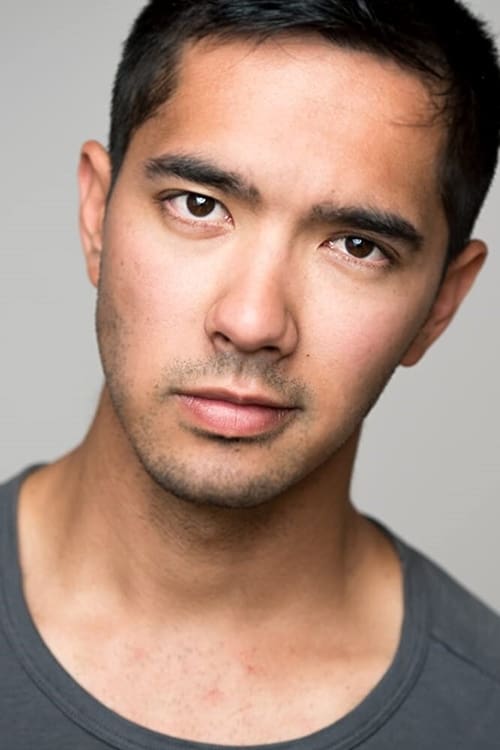
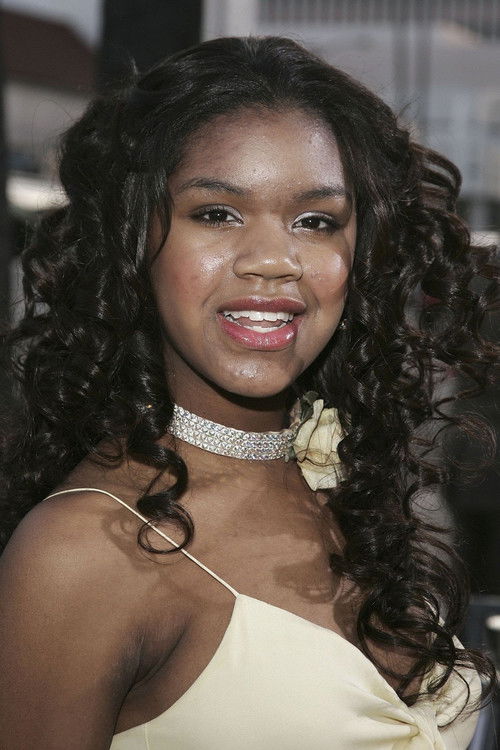
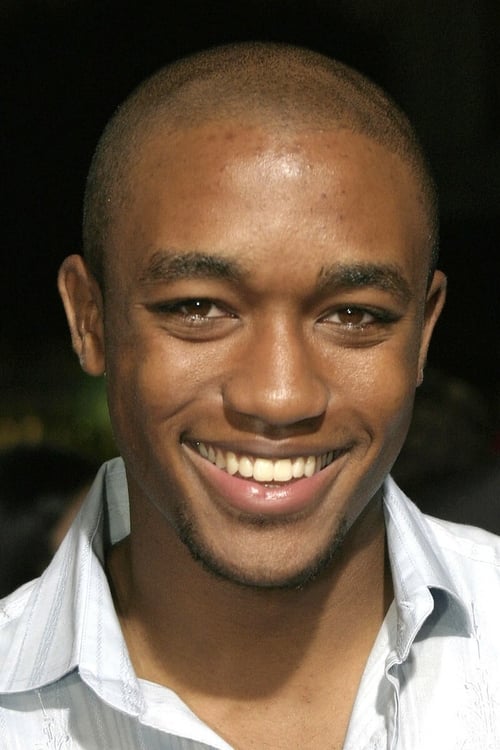
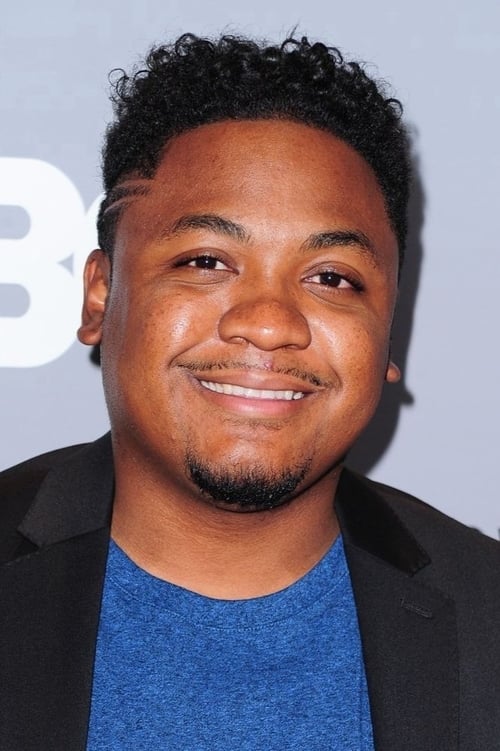
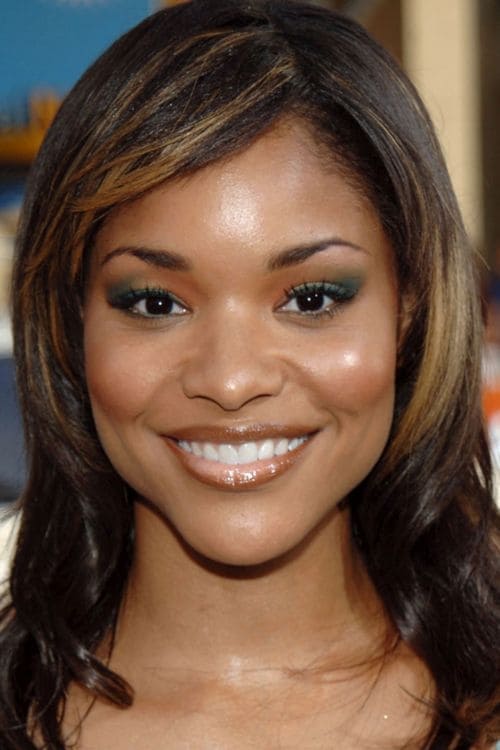
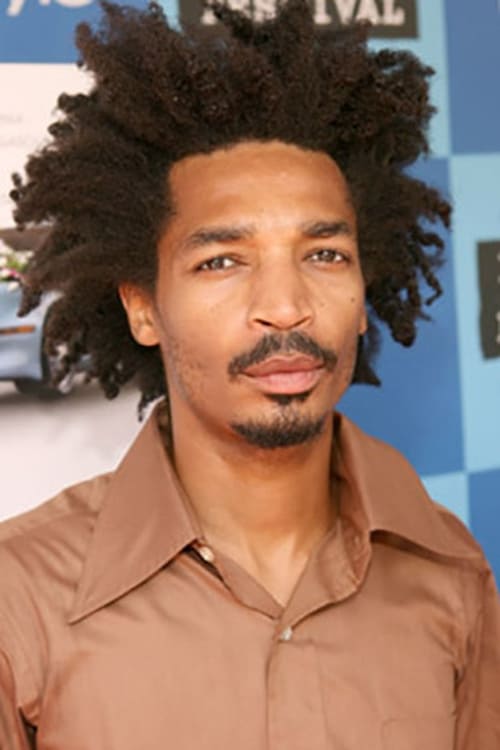
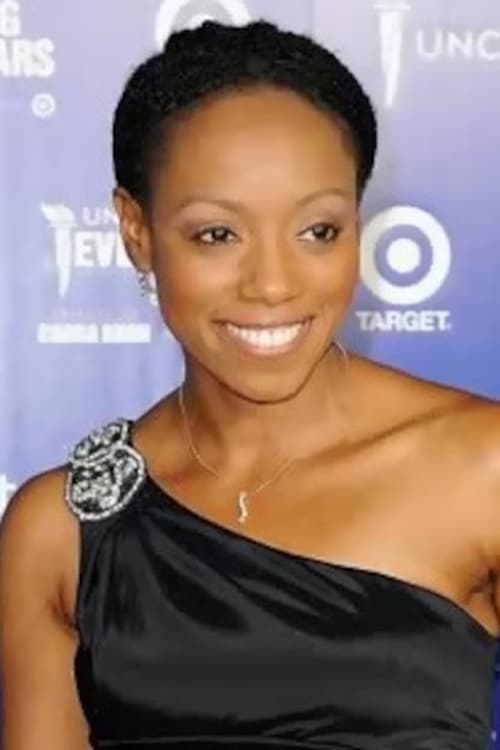

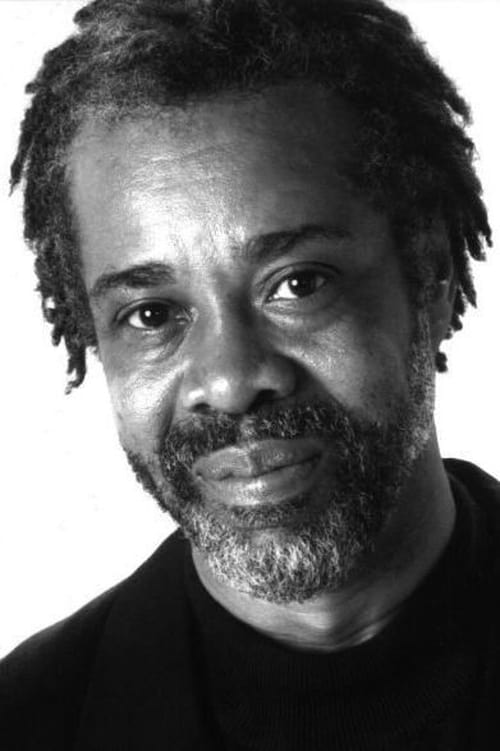
Akeelah and the Bee is a 2006 American drama film written and directed by Doug Atchison. It tells the story of Akeelah Anderson (Keke Palmer), an 11-year-old girl who participates in the Scripps National Spelling Bee, her mother (Angela Bassett), her schoolmates, and her coach, Dr. Joshua Larabee (Laurence Fishburne). The cast also features Curtis Armstrong, J. R. Villarreal, Sean Michael Afable, Erica Hubbard, Lee Thompson Young, Julito McCullum, Sahara Garey, Eddie Steeples, and Tzi Ma.
The film was developed over a period of 10 years by Atchison, who came up with the initial concept after seeing the 1994 Scripps National Spelling Bee and noting that a majority of the competitors came from well-off socioeconomic backgrounds. After completing the script in 1999, Atchison won one of the Nicholl Fellowships in Screenwriting in 2000, which attracted producers Sid Ganis and Nancy Hult Ganis. After an initial inability to secure funding, the project got a second wind as a result of the success of the 2002 documentary film Spellbound. Lionsgate Films undertook the production in 2004 and in the following year it was filmed in South Los Angeles on a budget of over $6 million.
Atchison remarked that his theme for the film, deemed an inspirational film, was about overcoming obstacles despite difficult challenges along the way. He also said that he wanted to portray African Americans in a manner that was not stereotypical and tried to show how African-American children incorporate some stereotypes. The film alludes to the importance of community as well as to problems black communities face. It also deals with esteem and stigma in school while criticizing the public school system. Cast members said that although the film was aimed at children, they considered it had important lessons for the parents as well.
Released in the United States on April 28, 2006, Akeelah and the Bee was positively received by critics and audiences. Reviewers praised its storyline and cast, lauding Palmer's performance, although a few critics panned the story as familiar and formulaic, and were critical of the portrayal of Asian-American characters. The film grossed $19 million, and received a number of awards and nominations, including the Black Reel Awards and the NAACP Image Awards. Film critics highly praised it for avoiding African-American stereotypes common in Hollywood films, while scholars were less favorable, even saying it reinforces some clichés.
Contents
Plot
11-year-old spelling enthusiast Akeelah Anderson attends the predominantly black Crenshaw Middle School in South Los Angeles. She lives with her widowed mother Tanya, her three older siblings Kiana, Devon, and Terrence, and Kiana's infant daughter, Mikayla. Akeelah's principal, Mr. Bob Welch, encourages her to enter the Crenshaw Spelling Bee. She initially refuses, but enters after being threatened with detention for the remainder of the semester due to her frequent truancy, and wins.
Visiting English professor Dr. Joshua Larabee is impressed by Akeelah's spelling talent and believes she has a chance of winning the Scripps National Spelling Bee, but declines to coach her after they argue over her use of African American Vernacular English. During the final round of the district bee, Akeelah is almost eliminated, but is given another chance after Kiana catches one of the other finalists cheating. Akeelah befriends fellow speller Javier Mendez, who invites her to join the spelling club at his Woodland Hills middle school.
At Woodland Hills, Akeelah meets Dylan Chiu, a Chinese-American boy who has finished second at the past two national spelling bees and is in his final year of eligibility. After Akeelah misspells a word, Dylan contemptuously advises her to find a coach. When an increasingly stressed Tanya discovers Akeelah has been traveling alone to Woodland Hills, she forbids Akeelah from participating in the regional bee and enrolls her in summer school to make up for her absences. Akeelah forges her deceased father's signature on the consent form and apologizes to Dr. Larabee for her rudeness before convincing him to coach her for the state bee, with her mother unaware of her disobedience.
At Javier's birthday party, Akeelah nearly beats Dylan in Scrabble, after which she overhears Dylan's overly competitive father berating him for almost losing to a "little black girl." At the state bee, Tanya finally discovers Akeelah’s secret when she receives an unexpected invitation from Javier's parents; when she arrives, she orders her daughter off the stage and chastises her for her dishonesty. Javier intentionally stalls to allow Akeelah to return to the stage in time for her next turn. After speaking to Dr. Larabee and Mr. Welch, Tanya reluctantly allows Akeelah to continue, and she advances to Scripps, along with Dylan and Javier.
As Christmas approaches, Dr. Larabee tells Akeelah that he is resigning as her coach, and gives her 5,000 flashcards to study despite her protests. Feeling abandoned by Dr. Larabee, distanced from her best friend Georgia, and pressured by her community to win and make them proud, Akeelah loses her motivation. Encouraged by Tanya, Akeelah recruits her siblings, classmates, teachers, friends, and neighbors to help her prepare. As the day of the national bee approaches, Akeelah visits Dr. Larabee, who confesses that she reminds him of his late daughter, Denise, who died of a terminal illness when she was younger than Akeelah. He agrees to accompany her to Washington, D.C., along with Tanya, Mr. Welch, and Devon. Akeelah also invites Georgia, rekindling their friendship.
Cast
Keke Palmer as Akeelah Anderson:
Three hundred girls auditioned for the role of Akeelah in Los Angeles, New York and Atlanta, with Palmer having auditioned five times to get the part. Atchison liked Palmer's acting, but the major factor in choosing her was that at only age ten Palmer already had a profound interpretation of the script. He chose her as he did not want a kid whom he would command but instead someone with whom he could have a collaboration: someone who would understand the role and "would make this character her own". He just assisted her to fully ensure that she would understand the character's feelings and would make "the right emotional choices".
Laurence Fishburne as Dr. Joshua Larabee :
Fishburne was pleased by the concept of the film, stating he was "really moved by it", so that he accepted to take his part "at an affordable rate", according to producer Michael Romersa. He first read the script in 2002 and moved by the fact that "there were very few people with the courage" to "make this kind of movie" he also accepted to be a producer for the film. About the character, Atchison said that Larabee is "vulnerable" and "a very sensitive guy" that has "a quiet moral authority". He also asserted that Fishburne made Larabee "a fairly buttoned-up, stoic type" and "subtly more animated" than how he envisioned the character. Larabee is based upon a teacher, Robert Larabell, Atchison had in Phoenix, Arizona.
Angela Bassett as Tanya Anderson:
Bassett's agent sent her the script which she "just loved". Atchison praised Bassett's portrayal of the character, asserting she "made Tanya a real person" after understanding "the thought process of the character". The director said Tanya wants the best for Akeelah but is reticent because she thinks "the dream will fail and make things worse". Bassett stressed that her character has to handle the pain of her husband's death in addition to having bills paid but that Tanya "gain[s] some measure of courage herself" inspired by Akeelah.
Curtis Armstrong as Bob Welch:
Atchison pointed Armstrong "was the perfect choice for the school principal". About his character role in the film, he said, "Welch is very excitable and provides a lot of the comic relief in our story."
Production
Writing
Doug Atchison first had the idea of making a film about spelling bees after watching the Scripps National Spelling Bee of 1994 and noticing that most of the contestants had "privileged backgrounds". Atchison also considered spelling bees to contain "all the drama and tension and entertainment value of a sporting event", and felt that this could be made into a film. From this, he got the idea to write a script following the story of a child who had talent for spelling bee but was from a low-income neighborhood so did not "have access to the resources or coaching to pursue it as these other kids had". He had the desire of making a "Rocky-like story" and although made it a "dramatic" plot, he declared it is "essentially a sports movie".
Atchison started his screenplay in 1999, when he wrote a five-page treatment in about a month. In addition to the fact he was working on other projects, Atchison said he waited years before starting to write because he "thought someone else would do it first". This did not happen, so he began to write by himself. Few changes were made in the process of transitioning from the original draft to the final product. One change was that at first, Akeelah's mother had a smaller role and Akeelah's father was alive. Also, Larabee had been an older man (72 years old), and a few characters were cut. However, Atchison has summarized that "the steps she goes through, the friends she's got, those were always the same."
Development
In 2000, Atchison submitted his script to the Academy of Motion Picture Arts and Sciences along with about 4,500 others, in hopes of winning the Nicholl Fellowships in Screenwriting. Atchison's script ended up being one of five scripts selected, and he won the grant. Editor Glenn Farr, then a member of the committee, offered to edit Atchison's film as soon as it was finished. Producer Sid Ganis was also attracted to the story during the award presentation ceremony. Nancy Hult Ganis, Sid's wife who was interested in public education, encouraged him to follow through with the film.
The film was produced by Lionsgate Films, 2929 Entertainment, Starbucks Entertainment, Out of the Blue Entertainment, Reactor Films and Cinema Gypsy Productions, with a budget around $6–8 million. However, the Ganis couple found it difficult to secure funding for the film. In August 2001, Danny Llewelyn's Panoptic Pictures acquired the rights of Atchison's script. In 2002, documentary Spellbound was released and attracted attention to spelling bees, which, according to Hult Ganis, "helped us in some way". In November 2004, Lionsgate Films announced they would fund and distribute the film; and in collaboration with 2929 Entertainment they would co-finance the production. In January 2006, Starbucks announced a partnership with Lionsgate to market it.
Another factor in not having a studio attached before was Atchison's desire to direct it as he wanted to ensure his story would remain the one he envisioned. Several studios wanted to turn Larabee's character into a white character but Atchison felt "it was important that Akeelah's mentor be someone that comes from her neighborhood, that looks like her." Lionsgate's President of Production Michael Paseornek agreed that Atchison should direct the script, claiming that he was the only person who could do it because the story "was in his heart and in his mind".
Filming
Filming began in February 2005; the crew filmed for ten hours a day for thirty-one days. The eleven-year-old Palmer had to follow the United States' child labor laws, which necessitated spending at least three hours a day at school, one on recreation, and one at lunch. Nevertheless, Palmer appeared in almost every scene, about which Ganis commented, "I honestly don't know how we figured it out, but we did". To get the filming done on time, Atchison storyboarded the scenes ahead of time and chatted with cinematographer David Mullen, the production designer Warren Young, and Glenn Farr to compile a list of scenes. This way, the filming team began each day knowing what shots they would take, their order, and the performances scheduled for each day. Most of the filming took place in South Los Angeles, which Atchison picked as the filming location due to their low budget. Scenes were also filmed at the University of Southern California, Hollywood Palladium—which stood in for the Grand Ballroom of the Washington, D.C. Hyatt Hotel—and Venice High School.
Authenticity
To bring authenticity to the film's portrayal of spelling bees, George Hornedo, who competed in spelling bees in real life, was hired to play contestant Roman and be "an unofficial technical consultant". Hornedo helped the actors to recreate "certain habits and idiosyncrasies they do on stage to help them spell". Thus, Akeelah skipping rope to memorize the words was added as "something that was normal for the spelling bee" but Atchison tried to create it in a "subtle" way as he thought the audience could consider this unrealistic. Hornedo and other children who had never acted before were cast because of their authentic portrayals of nervous contestants; other kids, in Atchison's eyes, were "too old in how they acted". Also, Jacques Bailly, who won the Scripps National Spelling Bee in 1980 and is currently the contest's official pronouncer, since 2003, played himself in the film.
To further help the staff, Atchison asked Paige Kimball, director of the Scripps National Spelling Bee, to be a consultant. Kimball "was amazed at not only at how precise it was in its recreation, but also how authentic the individuals and the casting for the event was". However, she and the organization did have some disagreements. Atchison has admitted that he originally created a more dramatic story than she wanted. However, he believed most of the disagreements were about technical procedures, "things you wouldn't even notice". For example, the children were originally sponsored by newspapers to compete, but Atchison felt this detail did not improve the story, so he removed it. There were some concerns about the screenplay, and Atchison changed some of them "because [he] thought it didn't matter one way or another so [he] just made them happy."
Music
The film features a musical score by Aaron Zigman, who wrote 45 minutes of compositions in two and a half weeks. He had planned to score Akeelah and the Bee over the holidays, but Lionsgate pushed its release date up, so Zigman was pressed for time to write the score. He drew inspiration from Fishburne's performance to write it. A soundtrack album consisting of 16 tracks was released by Lionsgate Records in a deal with BMG's RED Distribution on April 4, 2006. It peaked at number 193 on the Billboard 200, and reached the 19th and sixth spot on the Billboard Top Independent Albums and Top Soundtracks respectively. The original score, consisting of 37 tracks, was also released on April 4 as an iTunes exclusive.
Themes and analysis
Commentators on Akeelah and the Bee opined it dealt with multiple themes, including race and racism, poverty, educational system, competition and sportsmanship, self-esteem, self-image, stigma, community, friendship, gender and sexism, age, class and classism, and empowerment. Atchison affirmed that its focus is not the spelling but "a kid who learns what she's good at, becomes proud of that and doesn't want to hide it anymore. It's overcoming the fear of being great, before you can be great." Sid Ganis described it as a film "about hope and doing great things against all the odds", while a New York Press reviewer declared it "addresses the human condition".
After attending USC School of Cinematic Arts and working at a youth center in South Los Angeles, Atchison incorporated his experiences from the neighborhood into the film; among them, he heard that children who do well in school are said to be "acting white". As a result, Atchison tried to use the film to show what causes these children to doubt their own abilities. These doubts are shown through the preconceptions Akeelah and other community members have that "Spelling Bee is for someone else". She "must first overcome her feelings of inadequacy", and when she discovers Larabee comes from her neighborhood and is a successful man, it "empowers her to ... accomplish this task." Fishburne stated the film's treatment of race extends beyond the dichotomy of struggle and success, and goes into the prejudice that many people hold against black people competing in mainstream society. Atchison elaborated, "it's about this girl's insecurity about doing a thing that she hasn't seen people who look like her doing". The director affirmed that African-American children in film usually aspire to nothing other than being successful in sports, music or dance. He argued that the film industry has disseminated "lies about black inferiority", so he was interested in focusing on their intellect rather than let them succumb to the stereotypes. Atchison noted he had created the project for all audiences "but particularly for kids of color to see a little black girl who does something powerful."
The director also attributed Akeelah's low-esteem and doubt of her own capacities to the public school system, where she is bullied and "her intellectual curiosity is kind of crushed". As such, Akeelah is portrayed as an "undermotivated student", who "unwilling to be stigmatized as a freak or a brainiac", avoids showing her abilities. According to Wesley Morris of The Boston Globe, the film shows "the contradiction gifted students feel in an inhospitable environment". Ann Hornaday from The Washington Post opined that Akeelah's sentence "Why would I want to represent a school that doesn't even have doors on the toilets?" is "one of the film's many subtle critiques of the country's education policies." Writing in the English Journal, Amanda L. Hodges said it suggests a new approach on teaching with the "50,000 coaches" part; she declared it deconstructs the image of teachers "as those who keep order and disseminate knowledge" and shows that "teaching is not an isolated activity that begins and ends at the classroom door".
Release and reception
Marketing and release
The film was promoted by coffee shop chain Starbucks as a result of a partnership between Lions Gate Entertainment and Starbucks Entertainment. In January 2006, approximately 8,300 Starbucks locations in the United States and Canada began a promotional campaign for the film involving spelling-related trivia games and promotions on cardboard cup sleeves. Variety stated that Lionsgate spent around $20 million with its market only, while Los Angeles Times reported a $25-million cost to both produce and market the film. Ford Motor Company also sponsored the film by providing a Lincoln Zephyr to chauffeur the cast and creators to and from a screening.
Akeelah and the Bee was first shown at the 2006 ShoWest on March 14, and later premiered as the opening film at the 30th Cleveland International Film Festival on March 16. On April 20, the film was screened at The Academy of Motion Picture Arts and Sciences in Beverly Hills, and it had a sneak preview in 900 theaters on April 22. With predictions of strong box-office returns by film critics, it was released nationwide in theaters on April 28, grossing $6,011,585 in its opening weekend from around 2,195 American theaters and ranking eighth at the box office. The film closed its run on July 14 and 20 domestically and internationally respectively, with $18,848,430 domestically and $110,994 internationally. While the film received positive reviews, critics noted that it was not doing as well financially as they had predicted, and Lionsgate's Michael Burns characterized the film's gross with the word "only".
Outside the United States, the film debuted at the Sprockets Toronto International Film Festival for Children on April 23, 2006, where it was elected the best film by the kids in the ages of 10 and 11. In the United Kingdom, Akeelah and the Bee was first shown at the Cambridge Film Festival on July 7, and it premiered in the British theaters on August 18. The film was also screened in October 2006 at the Rome Film Festival, in which it competed at the Alicy in the City section.
Home media
The film was released on DVD by Lionsgate Home Entertainment on August 29, 2006, becoming the first DVD offered for sale at Starbucks. Its bonus features on the single-disc DVD include seven deleted scenes and a 25-minute making-of video featuring Atchinson and the cast. DVD sales in the United States reached $5,391,947 as 317,942 copies were sold after one week on sale. By December 2006, American consumers had spent a total of $25,855,396 to purchase 1,512,498 copies, making it one of the three most profitable home video releases of Lionsgate in 2006.
Critical reaction
The film received generally positive reviews from film critics. The review aggregator website Rotten Tomatoes reports an 86% approval rating based on 130 reviews, with an average rating of 7.1/10. The site's critical consensus reads, "A warm, family-friendly underdog story, featuring terrific supporting performances from Keke Palmer, Laurence Fishburne, and Angela Bassett". On Metacritic, the film has an average weighted score of 72 out 100, based on 30 critics, indicating "generally favorable" reviews. CinemaScore reported that audiences gave the film a rare average grade of "A+"—a feat only 52 films reached between 1982 and 2011. National Board of Review elected it among the best ten independent films produced in 2006. Additionally, two film critics, Chris Kaltenbach of The Baltimore Sun and Carrie Rickey of The Philadelphia Inquirer, added the film on their list of the ten best films of the year. St. Petersburg Times's Steve Persall elected it the best family film of 2006. African American Literature Book Club elected it as the best black film of 2006, as well as chose Fishburne as the second best actor, and Palmer and Basset as the second and eighth best actresses, respectively.
Roger Ebert of the Chicago Sun-Times wrote it is "an uncommonly good movie, entertaining and actually inspirational". Writing for Film Journal International, Doris Toumarkine praised its pace and how "Atchison takes spelling competitions and conveys the excitement of the 'sport,' the appeal of the 'game,' the thrill of the win, [and] the crushing blow of the loss". Hornaday from The Washington Post called the film "a triumph on many levels" and especially appreciated that South Los Angeles was presented without stereotypes. Jane Clifford of U-T San Diego felt the film would appeal to both children and adults, and stated that every time she tried to predict its plot "it took a sharp turn. A turn that leaves you facing your stereotypes and feeling a little sheepish". Dana Stevens, writing for The New York Times, asserted, "The innate suspense and charm of the spelling bee", and "a trio of crack performances" can turn "a formulaic sports picture" into a "tale that manages to inspire without being sappy". Shantayaé Grant of The Jamaica Observer wrote that "acting is spectacular, the emotions are real and this story of black triumph is simply phenomenal". A New York Press critic affirmed that Akeelah and the Bee "resurrects a nearly lost idea of what an art-movie really is" because it has "dramatic attention to character and place, psychology and existence".
Chang of Variety commented that it "plays like The Karate Kid with a pro-literacy agenda, pushing all the right emotional buttons yet hitting quite a few wrong ones in the process". The Evening Chronicle's review said it "conceals few narrative surprises" but contended that Atchison is also able to "defy our expectations". Turan of the Los Angeles Times criticized that the film "telegraphs its plot"; however, he praised it as "genuinely sweet and determinedly inspirational". PopMatters's Cynthia Fuchs stated it is formulaic as it has some "conventions that make so many other genre films feel stale", but that it "torques them slightly", emphasizing the "intellectual activities" Akeelah gets involved with. Furthermore, the film was described as "derivatively entertaining in a feel-good sort of way" by Rick Groen in an article for The Globe and Mail. Ingman of The Austin Chronicle described it as a typical sports film and felt it was heavy-handed at times. However, she praised it for its themes and called the film a "thoughtful, engaging" one and said it has a "cross-gender appeal". Morris of The Boston Globe argued, "If Akeelah and the Bee is a generic, well-oiled commercial contraption, it is the first to credibly dramatize the plight of a truly gifted, poor black child". Morris added, "Obviously, it's emotional propaganda. But it's just the kind of propaganda our children need".
Accolades
The film was nominated for six Black Reel Awards, winning only Best Actress for Palmer. Out of five NAACP Image Awards nominations, Akeelah and the Bee won Outstanding Actress in a Motion Picture and Outstanding Writing in a Feature Film/Television Movie – Comedy or Drama. At the Black Movie Awards, it won the five awards it was nominated for. The same happened during the Young Artist Awards where it was nominated for two categories and won two awards, and at the CAMIE Awards where it was nominated for and won an award. The film was also nominated for but did not win any award from the BET Awards, Broadcast Film Critics Association Awards, Chicago Film Critics, and Satellite Awards.